
The six tips will enable any reader to match my efforts.

Climate controls, reading light, bathrobe on hanger, also a slightly damp bathing suit.
Amtrak Southwest Chief 4, Los Angeles to Albuquerque, 4-5 July 2006: Genesis locomotives 141, 163, 148, baggage car 1716 (converted from a Heritage car), Superliner transition sleeper (crew accommodation) 39043, sleepers 32050 (my car, rebuilt with additional wood paneling, very Hiawatha) and 32031 (with the traditional carpeting halfway up the walls), diner 38055, Sightseer Lounge 33014, coaches 34063, 34117, 34107. I've adjusted my watch, it's about 40 seconds off.
Leave Los Angeles 6:47:01.
The rapid transit shops are trackside near the station.
These viaducts over the Los Angeles River have ornamental towers at each end.
Fullerton 7:16:33-7:22:50.
The steam train to the Dells evoked the Boston and Maine with those red window bands. In a collection of vintage coaching stock at the Fullerton station is the real Boston and Maine Salisbury Beach, one of a series of 6 section, 6 roomette, 4 bedroom cars built for the Bangor and Aroostook, Boston and Maine, and New Haven.
Riverside 8:04:34-8:10:25.
The last time I rode the Southwest Limited, as it was then called, the train used the Santa Fe's passenger line via Pomona and Pasadena with a stretch of median-strip running and some impressive viaducts. Tonight's line (new mileage!) was used by some Santa Fe passenger trains up to Amtrak. It has since received a commuter train line as far as San Bernardino.
It was dark by the time we reached San Bernardino, but not yet prime fireworks time. I saw a few impromptu efforts around San Bernardino but there weren't many pyrotechnicians at work on Cajon Pass.
Overnight, I was asleep through Baghdad and the alphabet cities, finally awakening and deciding to start the next day somewhere east of Winslow, Arizona. Overnight, the train managed to fall thirty minutes down on its schedule.
Once out of the San Francisco Peaks and onto the high desert, we were rolling in fine fashion, with Interstate 40/Route 66 to the north. Don't these cross-country trucks look puny rolling along, one little load at a time, from a train going 90 mph?
Gallup, New Mexico, 5 July, 8:56:40-9:10:45. The yardmaster at Gallup had his troubles, with some grain hoppers derailed and broken on the west end of his yard. It didn't cramp our style getting through town. The disadvantage of the digital camera is in the startup and shooting lag; had I brought the 35 mm to breakfast with me (tacky, tacky) I might have obtained a grab shot of the derailment.
East of Gallup, the Red Cliffs of New Mexico. I didn't see any coyotes lurking on the pinnacles.
Although there's now centralized traffic control on two main tracks through here, the train was observing the traditional left-handed operation dictated by the construction of the mountain crossing out of Needles. In places, the two tracks diverge. Here's one of multiple intermodal trains that met us, sometimes at speed, sometimes holding for maintenance reasons. Makes those trucks look really puny.
The schedule allows ample margin for recovering time.
Arrive Albuquerque 11:29:48 (against a schedule time of 12:22, presumably there are no intermediate time points east of Gallup or ample recovery margins between the last time point and Albuquerque.)
The diesels are refueled. With Albuquerque no longer on the primary freight main, there are no fuel racks at the station.
A few traders are selling Mexican and Southwest crafts, snacks, and tamales. (Yum. Also replenished the larder for the continuation of the journey.)
Two classic names in transportation surround the plaza. The flag confirms who has sovereignty, if not stylistic influence. But the bus station is closer to the tracks than the Amshack, which is behind me and farther from the tracks than the Milwaukee Airport or Sturtevant for Racine stations.
The inside of the bus terminal is tidy. Buses are accepting passengers for destinations in Texas and Mexico.
(to be continued)
Yes, world, there is a silent Arab majority that believes that seventh-century Islam is not fit for 21st-century challenges. That women do not have to look like walking black tents. That men do not have to wear beards and robes, act like lunatics, and run around blowing themselves up in order to enjoy 72 virgins in paradise. And that secular laws, not Islamic Shariah, should rule our day-to-day lives.He's on a roll.
And yes, we, the silent Arab majority, do not believe that writers, secular or otherwise, should be killed or banned for expressing their views. Or that the rest of our creative elite - from moviemakers to playwrights, actors, painters, sculptors, and fashion models - should be vetted by Neanderthal Muslim imams who have never read a book in their dim, miserable lives.He's taking some real chances going public with such sentiments. The diversity boondogglers and identity-politics hacks in universities may say and do foolish things, but they have not, as yet, issued fatwas with a price on my head. But it's always salutary for someone to say "Enough" to those who would like to deprogram the cult of authenticity. And removing the "medieval crazy" perception of Islam is likely to have better consequences for the world than, say, removing the "street thug" perception of professional basketball.
Nor do we believe that little men with head wraps and disheveled beards can run amok in Lebanon, Saudi Arabia, Iran, and Iraq making decisions on our behalf, dragging us to war whenever they please, confiscating our rights to be adults, and flogging us for not praying five times a day or even for not believing in God.
We know that use of that ever-loaded term "democracy" in a journal article entails a commitment of four or more pages of literature review in order to dodge the finely honed machetes of peer reviewers. In an op-ed you can explain democracy in a sentence, and readers will get the gist of your definition. Indeed, getting to the gist of things is all you need in editorials.But it's precisely that getting to the gist that makes an opinion piece, no matter how wittily posed, and no matter how carefully those 1000-3000 words are chosen, important things will be left out for others to nit-pick.
Ask a conservative what the biggest problem in America is today, and you’ll get answers like overtaxation, a sexualized culture, lack of respect for authority, insufficient church-going or big government running amok. But if you then asked the conservative what the real source of the problem was—the beating heart pumping blood to each and all of these socio-politico-cultural wounds—you’d get the same answer: liberalism.He goes on to complain,
As everyone knows, conservatives have succeeded in making “liberal” an epithet, something they throw at their opponents—who try desperately to dodge the label. The demonization of “liberal” has been successful in part because conservatives have effectively created what social psychologists call a “schema” with decidedly negative features around the term. A schema is a set of ideas that are connected in people’s minds, such that activating one idea—“liberal”—activates a whole set of related ideas, like lights on a Christmas tree. We assemble schemas as a way of storing and categorizing related information in memory. In this case, the related ideas are things like “soft on crime,” “weak on defense,” “sexually permissive,” and so on. The ideas liberals would like to pop right up in people’s heads when they hear the term liberal—“wants prosperity for everyone,” “supports universal health care” or “stands up to powerful interests”—are farther away from the schema’s center.But it takes more than the allotted 1,500 words to explain that Franklin D. Roosevelt is different from Hubert Humphrey and both are different from Ralph Nader, and that Herbert Croly is not the same thing as John R. Commons and both are different from Barrington Moore, jr., let alone Ward Churchill. And it likewise takes more words to address the incompletely-resolved tensions between addressing the root causes of crime, including expanded economic opportunities (which brings in its train yet another set of tensions over how best to accomplish that expansion) and ensuring that the most incorrigible criminals are kept away from law-abiding citizens. It's relatively easier to address the tension between providing for a proper defense and avoiding corporate welfare, or public pork in the form of obsolete military facilities in the districts of powerful Representatives or Senators, some of whom are quite vocal about "fighting" for "universal health care" and generally claiming to be on the side of the angels.
Post-hoc and all that, but Mr Waldman has left himself open to precisely this kind of rebuttal. His kind of bumper-sticker liberalism has not properly distinguished the desirable from the undesirable consequences of the policies his Establishment, when it was the Establishment and its ideas were the curriculum in the Ivy League and the op-ed pages of the Eastern dailies and its policies were enacted by urban Democrats. And as Ms Postrel's correspondent notes, the failure of what remains of that Establishment to disown some of its loopier allies and to consider the downside of some of their reforms pushes people in what the popular perspective perceives as a conservative direction. (But that, again, requires about four pages of literature review to distinguish the traditionalists from the libertarians from business interests.)[Mickey Kaus] seems to think that anti-gay = ignorant. That's part of it, but a bigger chunk are the people who see a real problem in America with sexuality (teen pregnancy, STD's, idiots who shouldn't have children breeding like feral cats). They lump gays in with all sorts of failed "alternative" families -- so they generally disapprove of "gay rights" as part of a sexual liberation movement they see sending the country down Satan's toilet. The gay rights movement and the left has (generally) helped to fuel this by refusing to suggest any sort of reasonable sexual morality to replace the traditional sexual morality we seek to tear down.
The net result -- Plano -- where parents rationally fear their teenage daughters getting knocked up and irrationally fear their sons wearing dresses.
Liberals need to embrace the culture war, because we’re winning. The story of American history is that of conservative ideas and prejudices falling away as our society grows more progressive and thus more true to our nation’s founding ideals. Conservatives supported slavery, conservatives opposed women’s suffrage, conservatives supported Jim Crow, conservatives opposed the 40-hour work week and the abolishment of child labor, and conservatives supported McCarthyism. In short, all the major advancements of freedom and justice in our history were pushed by liberals and opposed by conservatives, no matter the party they inhabited at the time.He's right, these policy disputes are about something other than partisan politics. But let's break this out. As the prospectus alerts investors, past performance is no guarantee of future results. (Should the Roman Catholic Church get a free pass on priestly misconduct because its leadership has an intellectual tradition that goes back to the Apostles?) Slavery: good for landed aristocracies, not good for entrepreneurs. Which conservatism is he speaking to? (We'd need another few pages of literature review to address the differing perspectives entrepreneurs seeking to develop local industry and landed aristocrats growing cotton for export would have on tariffs, and the tussle over the proper division of authority between a federal and a local government will persist up to the Big Crunch.) Jim Crow? The classic Establishment rhetorical trump. (Or must I issue an Aging Hippie Alert?) But there is room for serious debate, again, over the proper division of authority between federal and local governments. It's one thing to say that government shall not prohibit people from associating with each other; quite another to use the power of government to compel people to associate with each other. To what extent does residential school choice by moving to an exclusive community reflect well-intentioned school busing policies? Women's suffrage? Prohibition on one hand, safer streets and schools on the other. I'm hard pressed to classify the consequences of campaigning to women voters as what "conservatives" feared or "progressives" hoped for. The forty hour work week? Another few pages of literature review on the consequences of imposing such constraints on the ability of employers to offer a different kind of pay packet to a particularly desirable worker, or on the ability of eager-beavers to put in more time on their task. See also France, sclerotic labor markets in. Child labor? Did the laws codify adaptations that were already in progress. Put another way, did the laws, as written, condemn children to menial agricultural jobs or to delivering papers and mowing lawns, and do they interfere with the ability of precocious children to make money as web designers? McCarthyism? Yes, one point of agreement among libertarians, entrepreneurs, and traditionalists was that Communism was evil. Would Mr Waldman like to disagree? More to my point, might there be some area of agreement between some members of the current conservative coalition and some remnants of the Liberal Establishment that Communism was undesirable and that a Red Scare was not the most effective way of making that point? But again, that uses too many words to fit on a bumper sticker.
Winning converts isn’t just about convincing people you’re right on the merits of issues, it’s also about showing them that your side is one they want to join, and the other side is one they want to avoid.But to do so requires logic and content, something that's missing in his column, exactly as it is missing in the visible right-wing punditry he refers to in his allotted words. He hasn't addressed a salient selling point of the Right, which is that the old Liberal Establishment has all too often been willing to demonize and question the motives of its critics, rather than consider the possibility that some of its policy changes have had unanticipated and undesirable consequences. That goes for the current Right Establishment too.
According to the numbers provided, the price of gas doesn't seem to lead to people buying less. In fact, if anything is true, it's the opposite. As prices are rising, people are buying more gas. Out of every month in the past four years, the month when people in Wisconsin bought more gas than any other was September of 2005. That's the month following Hurricane Katrina when prices spiked to well above three dollars a gallon.Again, I could probably use the title "I'll Never Lack For Work" on about 75% of my posts. Increases in demand lead to higher prices and higher consumption ..., oh, never mind. There's also this thing called substitution along different margins to consider.
Erin Roth, who represents big oil companies in Wisconsin, says they thought three dollars a gallon would change people's habits but it didn't. "It doesn't appear that people are adjusting their driving habits. They may be adjusting other purchasing habits, but we're not seeing it in the transportation fuels," Roth said.Economic hysteresis, putty-clay, optimal inertia, break out the calculus of variations. Oh, and $3 a gallon today is the equivalent of $1.10 or so a gallon in 1982. And shifts happen.
It appears the time of year has more to do with demand for gas than price. For years, big oil companies have blamed increased summer driving for higher prices during the summer. So while demand may be driving up the price, it doesn't appear the price is driving down demand.Harder problem: is the effect of the seasonal shift different? Perhaps people are responding at the margins. The last couple of days I've found myself fuming about sluggish pickup trucks taking their time making left turns on cross streets, and at stop signs, a few sluggish pickup trucks, improperly spaced, add up to a long wait.
Doing it polemically might be more fun, but it's not necessarily doing it best. The theory of path-dependence has come in for a beating, particularly by critics of the Microsoft ruling such as Mr Kopel. There's a book called Winners, Losers, and Microsoft that's popular with critics of path dependence. It's a useful collection of possible counterexamples to the path-dependence argument. But that's not quite the same thing as a refutation of the argument itself. I have a somewhat more technical book, Bandwagon Effects in High-Technology Industries in the stack of summer reading. Perhaps a review by year's end.Under the Sherman Antitrust Act, the holder of a patent may not use that patent strategically to exclude competition from others. United Shoe Machinery was required to surrender some patents to the public domain; something similar happened in the consent decree breaking up the old Bell System, and the Microsoft settlement places more of Windows code in the public domain. Last week [October 2002], President Bush raised the issue with drug companies, seeking more rapid diffusion of generic drugs.
There is a research paper or two in here for somebody, particularly somebody a bit more familiar with the economics of strategic deterrence than I.
There's nothing quite like an established faculty member, let alone a clique of established faculty members, whose real agenda is to make sure that nobody better than them ever gets tenure (preferably ever gets hired) to kill a department, and their attitudes are likely to poison the university. And they're not likely to have that good a department. Pat Summitt (one of the most successful coaches in basketball, both sexes considered) has that among her management commonplaces.“In a healthy department, you are looking to hire the smartest people you can, and you want them to be at least as good as you and preferably better than you, and senior people want to work with them and collaborate with them,” said Cary Nelson, Jubilee Professor of Liberal Arts and Sciences and a professor of English at the University of Illinois at Urbana-Champaign. Nelson, president of the American Association of University Professors, has written extensively on power relationships in higher education in his books Will Work for Food: Academic Labor in Crisis and Academic Keywords: A Devil’s Dictionary for Higher Education.
He said that his department has always been one to welcome young talent, but that as he travels around the country, he’s sad to find out how common it is for departments to be “armed camps” where senior people abuse junior people (or at least certain junior people). Nelson said that it is important for departments to take responsibility for such situations. If there is one professor causing problems, a department should make sure a new hire can work effectively around that person. “This should be settled before someone arrives in a department,” he said.
When that doesn’t happen, many people say young scholars should run. Most senior people who are opposed to a new hire aren’t going to change, said Christopher J. Lucas, a professor of higher education at the University of Arkansas at Fayetteville and co-author of New Faculty: A Practical Guide for Academic Beginners (Palgrave Macmillan, 2002). “You really need to know what you are getting into here. And this could be so disruptive at a time you don’t have much traction, that you would be ill-advised to take this position,” he said.
Surround yourself with people who are better than you are. Seek out quality people, acknowledge their talents, and let them do their job.I'm not sure whether the manifestations of professional jealousy and insecurity at so-called prestige institutions reassure or discourage.
The report stresses the need to ensure that students graduate with the skills they need to function in an increasingly competitive global economy—but fails to address the fact that students don't graduate with those skills because the undergraduate curriculum is not designed to ensure that they acquire them. The report also fails to note that today's truly educated American needs more than skills—he or she also needs a strong grasp of what democracy is, what citizenship means, and why they matter.Again, it matters that higher education be, well, higher education, not a make-up of high school. The value of this report will be in both stimulating conversation and encouraging action such that the common schools do their job in order that the colleges and universities be able to do theirs.
Perhaps what is required is for strong voices in higher education to say Enough to doing the work of the high schools, because the high schools failed to do their work. In the absence of that concrete action, Mr Leef is likely to be correct.The trouble with American higher ed is not "access" or the want to innovative teaching methods or insufficient attention to math and science.
The big problem is that huge numbers of kids go to college for four or five or six years to enjoy the beer-and-circus atmosphere (to borrow the title of Murray Sperber's book) and then graduate with little or no gain in knowledge and skills compared to when they entered.
Then, usually burdened by debt, they end up doing the same kinds of jobs that any typical high school student could easily learn to do.
Our low and declining academic standards should have been a centerpiece of the report, but it's hardly even a bit of garnish.
The Boy shows no signs of outgrowing his love of trains. We will hopefully purchase a larger home in the next year or so, and I am already mentally setting aside a room for the tables and fake terrain of the truly train-obsessed.One of these days Southerners will get the concept of "basement."
While first teaching developmental English composition at an urban community college, I was given a peer evaluation by a senior professor. He confronted me in the hallway after class and said, “You’re teaching compare and contrast, and classification modes to students at this level?” I replied, “Sure. Aren’t we supposed to?”Yes, we are.
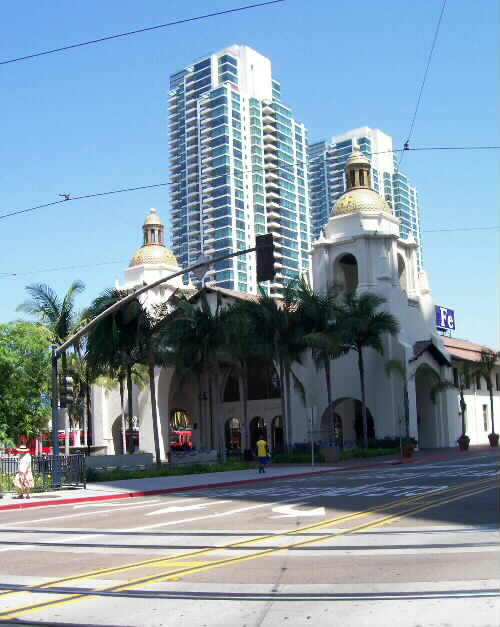

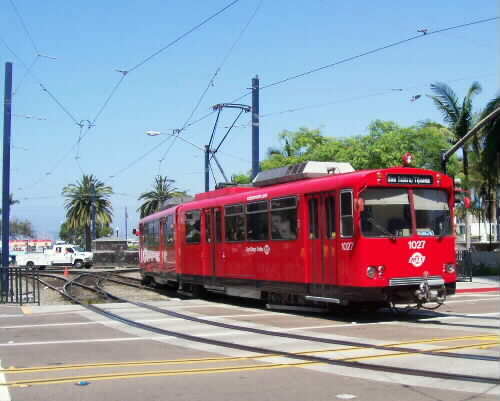




 Inside the station, the old ticketing positions are preserved as if the nave of a church. This portion of the station is closed off to public access. The waiting room has comfy lounge chairs. There are few station services compared to Chicago's Union Station, although Los Angeles's Chinatown is a few blocks walk away.
 The train was full most of the way north. The high-level coaches load and unload reasonably quickly. Passages to adjacent coaches and the cafe car are on the upper level. I saw one rake running with a Superliner coach as strengthening.
In the past decade, usage of interstates rose by more than 30%, according to the Department of Transportation, while additions of routes and added lanes increased capacity by only 4%. The problem is simple. Gasoline taxes and tolls, already unpopular, provide a fraction of the money needed to keep traffic from getting worse.That's only part of the problem. Congress has used tax revenues intended for the Highway Trust Fund to reduce the federal government's operating deficit. It also passes transportation bills that provide visible projects to help influential Representatives get re-elected, without necessarily adding useful capacity. Cars with stingy gas mileage and heavier and heavier trucks affect both the tax take and the wear on the roads. Market tests, the editorial board argues, might be an improvement.
A number of states, most visibly Indiana, have proposed leasing major toll roads to private companies. By doing so, they can raise billions of dollars needed to make road improvements elsewhere.But the editors envision turning the private company into the heavy, collecting sufficient revenues to repair the roads where the federal, state, and local governments dare not. (This ploy is an update on the old technique of using the regulated public utility as a tax collector. Look carefully at your telephone, electric, or gas bill. You may no longer be paying for the Spanish-American War, but you're still buying a lot of stuff for the governments.)
Ideally, such leases would not be necessary. Governments would give highways and public transit systems the funds they need, and they would not shy away from raising the requisite money from the people who use them. That would ensure a network of efficient, carefully integrated transportation systems in ways that a more piecemeal approach cannot. But given the extreme resistance, which dates back decades and shows no signs of abating, leases are the best option for easing gridlock.
The higher tolls that private companies will charge in return for their big payments inevitably will be unpopular. But unless the laws of supply and demand are applied to road capacity, drivers will pay in the form of lost productivity while waiting in traffic.The editors could have done better than asking Indiana legislator B. Patrick Bauer to offer the dissent.
There is concern about the role privatization plays in operating programs that benefit a state's general population. A private company's primary motivation is to earn a profit. If profits are not being earned, a company reduces costs by cutting personnel and services.That's the best he can do? As if school districts don't cope with shrinking enrollments by furloughing teachers and closing schools? As if highway commissions don't cope with shifting populations by deferring maintenance on less-travelled roads? Tollway privatization is no panacea: a regulated toll corporation that is not allowed to earn the replacement cost of its capital will be no more use than a tollway authority that earns insufficient revenues to rebuild the roads or a highway trust fund that does not allocate funds efficiently. On the other hand, this debate might be a good one to start. The freight railroads have recently begun to earn the replacement cost of their capital. Is it too much to ask that the highway system pass a similar test?
The quotation requires a bit more context. For the time being, the Economist article remains available online.I feel sorry for Shawn Carter. I know I shouldn't, but I do.
It seems that in recent weeks, Carter, a rap star and music executive known professionally as Jay-Z, has pronounced himself angry with the makers of Cristal champagne. Cristal, you should know, is frequently referenced in rap lyrics as a synonym for the high life, for pimping and drug dealing your way into an existence where the women are always willing, the luxury cars always gassed up, the sheets always satin.
This prompted the Economist magazine to ask Frederic Rouzaud, president of Champagne Louis Roederer, parent company of Cristal, whether it might hurt the brand's image to be associated with such a coarse, outlaw culture. Rouzaud's reply: “That's a good question, but what can we do? We can't forbid people from buying it. I'm sure Dom Perignon or Krug would be delighted to have their business.”
Romanovs and rappers. I love it. Such talk seems made to order for Thorsten Veblen or John Kenneth Galbraith. And that's where the president of Louis Roederer put his foot wrong. But the article qualifies his comments.The Russian tsars adored Louis Roederer’s Cristal, a taste that is shared today by rap singers Sean “P.Diddy” Combs (Puff Daddy) and Snoop Dogg. Welcome to the world of prestige cuvées—the very best and most expensive of champagnes, which go for anything from $100 to over $600 a bottle.
When ordinary mortals want to celebrate, the question is less likely to be Cristal or Krug, than whether to drink champagne or sparkling wine. Once the choice is made in favour of real champagne—produced only in the Champagne region of north-eastern France—it becomes a question of brand. Should you go for one of the big reliable names like Moët & Chandon or Veuve Clicquot; or maybe something a bit cheaper or more adventurous from a lesser known grower? If you feel like splashing out, you might plump for a vintage champagne. But for a select band of people—a mixture of champagne fanatics and the super rich—only the very best will do. Thus the need for “prestige cuvées”.
Just who these ultra-fancy champagnes are aimed at is a slightly sensitive issue. Cristal was originally created exclusively for the Russian tsars. Jean-Claude Rouzaud, who managed the Louis Roederer winery until his retirement earlier this year, once said: “We make our champagne for that 3-5% of consumers who really know wine, and who take the time to taste it correctly.”
But without New Money, how would we know what constituted tacky? Plastic flamingoes and reflecting spheres? Please.Both Dom Pérignon and Krug have had their share of unwelcome attention, too. The late President Mobutu of Zaire, a notoriously profligate dictator, was said to be a devotee of Dom Pérignon’s rosé champagne. Naturally enough, Rémi Krug, the chairman of the champagne house, prefers to emphasise the more cultured devotees of Krug—drinkers, like the late Ernest Hemingway or the painter Francis Bacon, who are “creative individualists who never follow the crowd, and have strong tastes of their own.”
As is the case with other luxury brands, some consumers are nevertheless motivated more by the sheer ostentation of the product. For many years, the most famous consumer of Krug in Britain was Jeffrey Archer, a novelist, politician—and, ultimately, prison inmate, after being convicted for perjury. His insistence on serving Krug, and nothing but Krug, to guests at his summer parties was regarded as a tad flashy—a little like his reported instructions to guests about how to find the lavatory (“Past the Picasso, left at the Matisse”).
The tsar was annoyed that his champagne looked and tasted identical to that drunk by his courtiers. He wanted a wine that was made with particular care, in a flashier and more distinctive packaging. And so Cristal was created, a particularly fine champagne in a clear bottle of crystal glass with a gold label. The design, which made Tsar Alexander one of the earliest exponents of bling, had a practical advantage: the clear crystal glass made it easier to check whether the champagne had been poisoned.I rest my case. The Economist reports on a taste test, to mix metaphors.
Back in London, your correspondent served Krug blind (that is, with its label covered up) to some dinner guests, along with a vintage champagne from another house called Nicolas Feuillatte and Pelorus, the finest sparkling wine made in New Zealand. Gratifyingly, they all much preferred the Krug—although none regarded it as utterly different from the other champagnes they had tasted.Mr Carter has taken offense at Mr Rozaud's remarks and seeks to put Cristal in the same odor as the Birmingham buses and Greensboro lunch counters. Mr Pitts is less than impressed.
The Washington Post's Jabari Asim suggests the Cristal boycott is misplaced.And here, it might be worthwhile to observe two facts.
One: Cristal has managed to thrive for most of 130 years without Jay-Z's endorsement. Indeed, the brand is manufactured sparingly and is perpetually sold out around the world.
Two: Cristal retails for upward of $200 a bottle. How, exactly, do you launch a boycott of something most people can't afford? Might as well ask me to boycott Gulfstream private jets while you're at it.
It is, on both sides, a silly contretemps. Still, there is something poignant in Jay-Z's apparent surprise and hurt at Cristal's blithe rejection of hip-hop's operating ethos: that acceptance can be bought.
There has never been an entertainment form that placed as much faith in the healing virtues of materialism as rap. From the days when Run-DMC first extolled the virtues of Adidas shoes, rappers have invoked brand names and branded themselves with talismanic fervor. Timberland! Hennessy! Lexus! S. Carter!
They seem to feel that when you can afford these things, it makes you, I don't know ... complete. As if, with Tims on your feet, Hennessy in your glass and a Lexus in your garage, you're good, you're covered, you're in the club.
For an art form whose artists and fans are largely young, largely black and largely from poor, bullet-scarred neighborhoods, it is a powerfully attractive fantasy. But it is a fantasy nevertheless.
Which is, in so many words, what Frederic Rouzaud just brutally explained to Shawn Carter: that he is not in the club. That no matter how much Cristal he buys, he will never be in the club. Sure, kid, we'll take your money. But don't mistake that for respect. Not while you're young. And black. And reeking of nouveau riche. And representing values that are anathema to our own.
So yeah, I feel sorry for Carter. But at the same time, what's it tell you that he was even surprised?
Among the many lies of hip-hop, this whole notion that wearing or imbibing or driving the proper brand will make you whole is in some ways the most infuriating. It represents a corporatization of cool that would have made Miles Davis ill. In his era, after all, cool meant being an iconoclast, a visionary threat to the status quo. In Jay-Z's era, it is a brand name, it has a sponsor, it can be bought off the rack.
Rap could have been, should have been, a truth-teller and world-shaker. Instead it has largely contented itself with being free advertising for corporate titans, selling fake cool, sometimes with corporate assent, but often, without even a thank-you.
Brand names, it says, will make you whole.
Pro Hip Hop, an occasional host of Carnival of the Capitalists, has been following this story since it broke, with a more recent roundup offering this observation.Boycott. Now that's a word you don't hear so often these days. Hard for me to encounter it without thinking of Rosa Parks and brave Alabamans walking and carpooling their way to justice. But I suppose it applies just as well to millionaires whose sensibilities have been offended. A bottle of Cristal, it should be noted, can go for $300 or more. That's a lot of bus fare.
So that does it. No more bottles of this high-priced bubbly for me. The next time I'm at Plumm, the swank Manhattan nightspot, I'll tell the waiter to fill my flute with Dom P. Rose, a variety Jay-Z is experimenting with these days.
Seriously, though, I'm not mad at Jay-Z for expressing his displeasure. Just as with women and others who have taken offense at his sexist, misogynist lyrics, he has a right to be peeved by what he sees as disrespectful treatment. But there are far bigger alcohol-related problems among the urban population that helps keep his tunes at the top of the charts, and he would probably be
quick to agree.For instance, while Cristal seems hesitant to embrace young black consumers, the makers of malt liquor are more than eager to establish a relationship. They are among the alcohol manufacturers who target African-American youth, according to a new study by the Center on Alcohol Marketing and Youth (CAMY) at Georgetown University. The analysis, an update of an earlier study, found that alcohol ads on radio and television and in magazines in 2003 and 2004 reached more African-American youth ages 12 to 20 than youth in general on a per capita basis.
It's a little silly to call someone racist for not wanting to be associated with musicians who brag about their criminal past and, in some cases, appear to be continuing their criminal activities. Just a thought.
The purpose appears to be to reduce a relatively unobtrusive form of robbery.Against that backdrop, the Illinois Bankers Association about a month ago began urging institutions to adopt a program to encourage customers visiting their branches to take off their lids, pull down their hoods and remove their shades.
"This is in response to the rising number of bank robberies we've seen in Illinois," Linda Koch, chief executive of the association, said Friday at a bank robbery seminar in Chicago.
The IBA believes the campaign will particularly curb incidences of so-called "demand note" robberies, where a person, usually working solo, comes into a branch and, in low-key and typically non-violent fashion, hands the teller a note demanding money. They want to get out as quickly as possible and don't want to be recognized.Years ago, "wardrobe engineer" John T. Molloy used his experience as the muggee to make a case for what he called Dress for Success (since updated.) He noted that none of the usual suspects in the police department's facebook were wearing ties.
Doing research and making claims. Having others criticise that research and provide evidence against the claims. The back and forth. That's the process of discovery. That's what true academic researchers do. But it's things like this petition where researchers have their career aspirations hampered by taking unpopular positions that hampers the process of discovery that should be the focus of academic research.Read and understand.



