Showing posts with label academic culture. Show all posts

27.7.26

BOREDOM IS SOPHISTICATION.

That's true of soporific public radio.


That's true of serious film (pronounced fillllllm).

That's true of juried art exhibitions.

Why should footie be any different?
It's “the beautiful game,” and for most of my adult life I’ve been patiently informed, usually by someone who calls it fútbol, that I simply lack the sophistication to appreciate it. But they’re wrong. Soccer isn’t beautiful. It’s boring, and it has nothing to do with sophistication.
The author documents a number of things, including outcomes often indistinguishable from a coin flip.

After a dozen footie-relevant posts in the past two months, it's time to put the dodecahedron back in the locker for a while.  That is, once stoppage time is done.


Sorry, I couldn't resist that parting shot!

Find yourself a circus and go to it.

23.7.26

THE PERILS OF PRESENTISM.

There is no topic so humble that an academic can't befoul it.  Consider "The Rise and Fall of the Public Sandbox."  It's a review of a book, which suggests a lot of Theorrhea is in hiding.

HILLBILLY HONOR CULTURE?

Basketball pundit Hallie Grossman profiles Sophie Cunningham.  "Love her or hate her, Sophie Cunningham won't be ignored."  Ms Cunningham professes not to be interested in the culture wars, although the culture wars have caught up with her.
These late-game theatrics -- the pro-wrestling bluster disguised as flagrant foul, her ejection, the scrum that breaks out after the takedown -- are not, it turns out, the end of anything. They're the beginning of everything.

In the year to come, Cunningham will have a billboard outside Madison Square Garden, star in the Sports Illustrated Swimsuit Issue, moonlight as a ring girl at UFC 329, receive her own colorway on an Adidas shoe, be floated as a future vice presidential candidate and, of course, unleash the finger point that launches a thousand memes. You've seen it. The White House has seen it. We've all seen it.

Cunningham, like the WNBA, has become a cultural flashpoint. The league's footprint has never been bigger and the chorus of voices around it has never been louder. All-Star voting and sponsorship opportunities, whistles and non-whistles, who and who does not get to capture this attention economy -- all have become proxies for debates about race and gender, identity and politics. Squarely in this morass sits Cunningham, a white, conventionally attractive, attention-grabbing reserve player who is not one of the league's All-Stars but is one of its most magnetic stars.
We'll deal with the gender studies throat clearing that concludes that quote in due time.

22.7.26

STANDARDS MATTER.

National Review's Brian Allen correctly observes, "If the art is amateur hour, race or gender won’t do anything to make it better."

One of these days academic gatekeepers will rediscover that undeniable truth.

20.7.26

REPUTATIONALLY BANKRUPT.

Reap what you sow, higher education.  Count Jonathan Turley as among the disgruntled.
As I have previously written, this generation of administrators and faculty has destroyed not just public trust in our institutions but their financial viability. Colleges are closing at an alarming rate as both tuition and revenue fall. Yet, faculty members would prefer to lose their jobs than their bias in hiring and teaching.

According to Gallup, roughly a third of polled individuals cited partisan bias or indoctrination on college campuses. Bias was the leading reason for given for the lack of trust, ahead of tuition costs. That is a large chunk of potential applicants and their families. Worse yet, they are not wrong.

Our campuses have been ideological echo chambers where collective orthodoxy is more prominent than academic inquiry. This group think has created an overtly hostile environment for more than half of this country that consider themselves conservatives or libertarians. As schools struggle to maintain financial stability, they are literally cutting away half of their potential applicant pool.

Currently, only 37% of Americans report having “some” confidence in the institution. In any other industry or area, that record of alienation and mistrust would prompt massive changes in management. In higher education, however, colleges and universities remain captive to administrators and faculty members who replicate their views and values to the exclusion of many others.

The result is evident in multiple surveys which reveal widespread self-censorship among students, particularly conservative students.
The pool of young people to recruit future matriculants from is smaller, the job market for symbolic analysts isn't what it once was, and the conversion of critical theories from potentially interesting ways to play with ideas into epistemically closed tight priors take their toll, don't they?  I'm not sure that looking for Republican-leaning faculty is necessarily the right way to identify epistemic closure: the relationship between the academy and the public policy complex probably strongly skews toward Applied Welfare Economics Paradigm.

PARTICULARISTIC INTERSECTIONALITY.

It's impossible to make stuff like this up.  "June and July are about queer joy and resilience. It’s crucial we use the month and its festivities to fight for liberation."  Wait, what, wasn't it only in the past few years that June went from being dairy month to being fairy month?  But one month is not enough.
June’s Pride Month and July’s Black Pride Month serve as more than a celebration. They are a necessary corrective to the nation’s revisionist history, selective memory, and deliberate attempts to erase the struggles, achievements, and contributions of LGBTQ+ people.

Pride is about more than a single day or month of celebration. Without a commitment to justice, restoration, and lasting social change, our celebrations risk becoming merely performative. While Pride is undeniably a celebration of our lives, resilience, and achievements, it has always also been a public declaration demanding equality and justice. For many, like myself, celebrating Pride and making a political statement are inseparable, because the freedoms we celebrate were won through activism and continue to require vigilance and advocacy.

But views on Pride are deeply divided—and not simply along the lines of race, class, gender, or sexual identity. Some LGBTQ+ Americans feel that activism, such as protests against police brutality and in support of Palestine, has made Pride too overtly “political,” and would prefer it serve primarily as a celebration where queer people can simply gather and enjoy themselves. Others, like religious conservatives and rightwing Republicans, see Pride as sinful and indecent behavior on public display. They dismiss Pride as a month-long bacchanalia of drugs, alcohol, and sexual excess, believing it desecrates the legacy of the Stonewall Rebellion and diminishes the political significance of the LGBTQ+ rights movement.
I wonder if author Irene Monroe got a Minimal Publishable Unit out of that, or if The Progressive isn't peer reviewed enough to claim academic credit.

13.7.26

CLIMATE CULTISTS NEVER REST.

It's the middle of July, which we used to refer to as the "dog days," either as a reference to Sirius, the Dog Star, prominent in the summer sky, or to the sort of humidity leading a prudent dog to do nothing.


It's not that heat waves haven't happened before.

10.7.26

REMAIN CALM, ALL IS WELL.

According to the infelicitously named Chad M. Topaz of Williams College at the house organ for all wokeness, all the time in higher education, "The journals are fine. Everything is fine."

2.7.26

HOW QUICKLY CAN PUBLIC OPINION CHANGE POLICY?

Consider, dear reader, that the Eighteenth (liquor prohibition) amendment took effect on 16 January 1919, and was repealed effective 5 December 1933.  The Interstate Commerce Commission, an early manifestation of the independent regulatory commissions, or the administrative state, if you will, was established by An Act to Regulate Commerce dated 7 April 1887 and finally, mercifully, allowed to expire in 1995, long after it had outlived its usefulness.


All that by way of preamble to the recently issued Trump v. Slaughter, which restores some presidential powers to swap out appointed or hired employees of the regulatory agencies, broadly understood.  That ruling has people such as Outside the Beltway's James Joyner troubled.  "American society is considerably more complex now than it was in 1935. It makes even more sense now than then that some regulatory functions should be carried out by subject matter experts not subject to the changing whims of the electorate."

That position has, from the beginning, been the logic of the administrative state.  It's as simple as a city council setting up a commission to adjudicate streetcar fares or cable connection rates rather than having to conduct a vote every time business conditions changes, and as fraught as, in protecting those "subject matter experts" from those "changing whims of the electorate" you get, if not necessarily "swarms of officers, harassing our people and eating out their substance," unelected bureaucrats.  In three-plus decades of teaching regulatory economics, I never lacked for material suggesting that things didn't always turn out in practice the way we could draw them up on the blackboard.

1.7.26

REMEMBERING GORDON WOOD.

Steven Hayward mourns his passing.  "Now we shall mark the occasion next month without his cheerful demeanor and fund of hard-earned wisdom and knowledge, which finds no intellectual equal in this nation of equal citizens. It will not be the same without his presence."  By all means, read his eulogy in full, and pay close attention to his arguments noting that "radicalism" does not have to mean "leftward ho."
It is hard to avoid wondering whether the shocking news of the ghastly accidental death of historian Gordon S. Wood, struck down by a motorist in a shopping center parking lot, is a bad omen, coming within a month of our observance of the 250th anniversary of the Declaration of Independence. Wood has been enjoying a much-deserved spotlight in the runup to the sesquicentennial, but now his voice will be absent on July 4.

Widely acknowledged as the pre-eminent historian of the American Founding in our time, Wood was virtually without peer within academic American history today. There is, however, an arc to his career and thought as a historian that offers encouragement that, in this time of doubt and division about the character and future of American democracy, it is possible to capture and celebrate America’s complex and enduring foundations.

Wood burst onto the scene in 1969 with the publication of The Creation of the American Republic, 1776-1787, a capacious 653-page exploration of the ideas that crystallized into the American Revolution and the Constitution eleven years after the Declaration. Wood had been a student of Bernard Bailyn, one of the leading historians of American political thought in the mid-twentieth century, and Wood built upon Bailyn’s well-regarded Ideological Origins of the American Revolution, but can be said to have advanced and refined a bold new interpretive strand of American historiography—the “civic republican school.”

The civic republican school argued that modern democracy owed less to Lockean liberalism than to a more classically inspired tradition centering on “civic virtue.” It was an explicit alternative to the liberal tradition of natural rights and rugged individualism. Although Wood was restrained in staking out a clear position, his book offered considerable backup for the civic republicans, many of whom were openly seeking an alternative for understanding America and to displace the “liberal tradition” as defended by Louis Hartz and other mid-century historians.
Mr Hayward's colleague at Power Line Scott Johnson offers Hillsdale's Wilfred McClay an opportunity to extend.
[Professor Wood] may have spent his life working mainly in the Ivy League, but he was no blueblood. He was an affable, hardworking guy from a working-class family in Concord, [Massachusetts], and you could hear his origins in his unmistakable Yankee accent. A great historian could also be a regular guy.

Although he studied at Harvard under the august Bernard Bailyn, and excelled in all he did, he acquired none of the mandarin manners of the higher professoriate, but remained himself. His sympathy for the lives and ways of ordinary people informed his most important work, and was part of his visceral love of democratic America.

His book The Radicalism of the American Revolution was in large measure a tribute to the Revolution’s astonishing achievement in ushering in a genuinely new world, one in which feudalism and monarchy were a dead letter, the elite values of pre-Revolutionary classical republicanism had lost their appeal, and there was a general awareness that, in Jefferson’s famous words, “the mass of mankind has not been born with saddles on their backs, nor a favored few booted and spurred, ready to ride them legitimately, by the grace of God.”

Instead, Wood wrote, America would find its greatness in a new way: “by creating a prosperous free society belonging to obscure people with their workaday concerns and their pecuniary pursuits of happiness—common people with their common interests in making money and getting ahead.”
Such sentiments are what one might expect from Power Line, which argues from an institutional-conservative seasoned lightly with populism.

29.6.26

OH, THE HUMANITIES!

Joanne Jacobs notes, "You can major in Taylor Swift and minor in K-pop -- but shouldn't."  That's in endorsing a recent lament for the kind of work students get away with to earn degrees.
In its early years, the University of Wisconsin-Madison offered courses covering Virgil, Cicero, Livy, logic, calculus, ethics, chemistry, constitutional law and other touchstones of a classical education.

In the year of our Lord 2026, students can stroll past Lincoln’s statue looming atop Bascom Hill on that very same campus to study video games through feminist, queer and ecocritical lenses.

Culture warriors are busy bludgeoning universities for their ideological monocultures: founding civics institutes, prohibiting diversity, equity and inclusion statements in hiring and cutting federal funding to questionable research — but mediocrity is arguably as large a problem as ideological capture.
Maybe the humanities disciplines should have stuck to close reading and creative writing.  It's not as if nobody's noticing.  "Dear reader, it's straightforward enough: think of 'the humanities' as 'those disciplines that deconstruct reality as a hobby' and you won't go far wrong.  That reality has a say in what gets deconstructed never ceases to catch the academy by surprise."

25.6.26

LIFE IS HARD AND DEADLINES AREN'T GOING ANYWHERE.

Predictably, a "faculty development specialist" called Jordan Davis devotes a column in the house organ for all wokeness, all the time, to argue "Faculty Are Bringing Corporate Culture Into the Classroom" isn't helping students.

What, instead?
There’s a clear value to embedding clinical rotations, business apprenticeships and education practicums in curricula. I support guest speakers, alumni panels and worksite visits for students to learn directly from experts. I’m all for job shadowing, client-based projects and scenario-based activities where students take on professional roles. The value of these engagements, I think, is to give students realistic, human-centered practice in solving ethical, ideological, logistical, creative and rhetorical challenges in their disciplines. In educational settings, these priorities should come well above meeting deadlines.

Being flexible as an instructor can be challenging, but it is possible, with instructors able to choose among many options for flexible deadline policies, whether they are teaching large or small classes. Let’s not allow the urge to turn our classrooms into the workplace—whether for simplicity’s sake or for the illusion of accountability—to detract from our top responsibility: making learning happen.
Right.  "Business as usual. Senior administrators and their enrollment managers can congratulate themselves on their inclusiveness (read admitting unprepared students and calling it access) and U.S. News continue to sell their guides."

24.6.26

TRUTH IS NOT A TEAM SPORT.

Radiologist Scott Atlas suggests the future of higher education might not be so bright, in part because "consensus" and "collegiality" have crowded out scholarly inquiry.
Why, at this moment in history, is it particularly important to consider how America’s institutions—here, colleges and universities—should be reformed, or whether they can even be reformed?

After all, for decades we have been aware that our institutions were failing: editorialized, dishonest journalism; wasteful, corrupt government; and colleges and universities increasingly abandoning their essential purpose of fostering the free exchange of ideas and critical thinking in favor of agenda-driven social advocacy, particularly advocacy unbalanced toward the left.
It's not that nobody noticed.

23.6.26

CODIFY THE LIABILITY, CONSERVE THE TRANSACTION COSTS.

Sometimes I'll speak in riddles, and with all the algorithms combing through Cold Spring Shops these days, maybe now is a good time to serve an oldie up.  Twenty years ago, frustrated by Student Affairs types continually putting more special education responsibilities on faculty, I proposed to codify the liability the common schools were saddling higher education with.
Perhaps the most salutary reform the public universities could obtain would be to announce something like "Effective 15 April 2007, admission to Enormous State University (flagship, land-grant, compass-direction alike) is contingent on passing the mathematics and writing placement tests. Enormous will no longer offer no-credit remedial mathematics, writing, and speaking courses for high school graduates who have not really received a high school education. Furthermore, Enormous State's Office of Institutional Research will report placement test passage rates by school district." My sometimes sparring partner at Anonymous Community would no doubt be a bit unhappy to receive additional remedial students at the same time that his state is griping about having to pay for the same courses twice. Fine. As part of the reform, bill the school districts for those remedial courses and reimburse the community colleges. Principals now have a choice: offer token academic courses and suffer a budget cut, or spend money to improve their academic content.
Impractical?  Perhaps.  Get pushback?  I did.  "That changes may appear 'pretty screwy' is not necessarily reason to stop thinking along those lines, particularly when the status quo is not working."

HOW NOW JOE GOW?

Not yet gone.  "Mr Gow was the chancellor (Wisconsin-speak for campus president) of Oktoberfest destination college Wisconsin-LaCrosse until his unusual side hustle came to light."

Nor forgotten.  "Joe Gow Hangs in Legal Limbo."  And you thought negotiating with Iranians was exhausting?  "While he accepted his firing from the chancellor role, which he was set to retire from in 2024, Gow has argued he should not be fired as a tenured professor for making adult videos on his own time—a position that has been endorsed by First Amendment advocates, including the Foundation for Individual Rights and Expression."

19.6.26

OUR JUNETEENTH FLAG HOIST.

Yes, there is some sort of special flag for the day, but the Flag Code does not prohibit the display of older versions of the Flag.  Thus one from the Emancipation Proclamation era flies at Cold Spring Shops headquarters.


The history lesson accompanies that photograph.

Unfortunately, former president Barack Obama used the dedication of his flak tower, er, blast furnace, er, coaling dock, er, presidential center to engage in a ridiculous perfomance of presentism.  "Obama said the founders 'fell terribly short' of the Declaration's promise by leaving slavery intact and limiting the vote to white male property owners."  Well, a guy who is slagging on a memorandum of understanding that some Iranians are asserting turns Old Persia into a colony (with a Trump casino on the Caspian Sea?) is not somebody who we should respect for his intellectual chops.

LIBERAL WEENIES COME FOR FOOTIE.

Seriously, Adam Kadlac?  "Should you feel guilty about rooting against the US in the World Cup?"

Every four years polite Americans pretend to be interested in men's footie.  Cold Spring Shops, not so much, with only 42 posts getting a "footie" label in going on two dozen years, and most of those professing benign neglect with a little snarking, e.g. "Ordinarily, that would be reason enough for Cold Spring Shops to continue its policy of benign neglect of the game popular with adolescent males in the third world and eight year old girls here."

The liberal weenies, though, make themselves figures of fun, starting with calls for a boycott of the Stateside games that prompted my "I have no plans to attend or to watch any World Cup games. Where can I sell carbon offsets?"

12.6.26

LESS PROMOTION THAN BANISHMENT?

Scott Scheall's "Why the Worst Get on Top in Academia" notes the nasty circle by which the proliferation of unfunded mandates provides career opportunities for failed scholars.
The incentive structure of the modern American university encourages relatively unsuccessful scholars, those who fail to establish fruitful research programs early in their careers, to pursue administrative positions, where they wield authority over more successful colleagues, who actually generate educational value. As a result, the American university is disproportionately governed by relative academic failures.

An effective scholar enjoys benefits impossible to find elsewhere in today’s workforce: freedom to follow ideas wherever they might lead and a considerable amount of free time to do it. Those who succeed aren’t inclined to leave the laboratory or library for administration.

Though administrative salaries tend to be higher, the rest of an administrator’s work-life is poorer in every other respect, involving endless committee meetings, paperwork, budgetary knife fights, student and parent grievance adjudication, and the difficult business of cultivating donors. Intellectual freedom and scholarly prestige are nowhere in evidence. 
I concur in part and dissent in part.  First, once upon a time, in a galaxy far, far away, there was a tradition of servant leadership in higher education in which each highly respected faculty member would take a turn as department head, or dean, or provost, or president.  That was undone by two things, that proliferation of unfunded mandates, which at least until recently, implemented the aesthetic preferences of the faculty, which put defenders of faculty governance in a bad place where some hack could accuse him of Unenlightened Attitudes; as well as the problem that rotating the servant leadership works better in a department with multiple strong faculty members.  That's less common outside the Ivies and the like, and the plot of more than a few academic novels suggest it's not common even there.  Second, as a consequence, endless committee meetings, wordsmithing of documents, and knife fights over penurious budgets are the modus operandi of faculty, sometimes faculty with multiple Minimal Publishable Units on their curricula vitae: often ideas they followed that, judging from the lack of citations to their work, nobody bothered to follow further.  That research time: it's anything but free, and keeping current with what used to be circulated as working papers and what now is being uploaded somewhere has only become more challenging with online working paper repositories and journals.  Rivista Internazionale Numere Due di Bovini doesn't even get a look.
8.6.26

I'M THE BOSS. YOU'RE THE KID.

The critical studies types are notorious for using wordnoise to turn a phenomenon of long standing into a thought crime.  Simply take a commonplace situation and tack a "-normativity" on the end and just like that you've pronounced anathema on it.  A few weeks ago it was "autonormativity," which is only slightly more ludicrous than the long-standing "heteronormativity."

If that doesn't work, there's always tacking an "-ism" or a "-phobia" on it.  This week's example is "adultism."


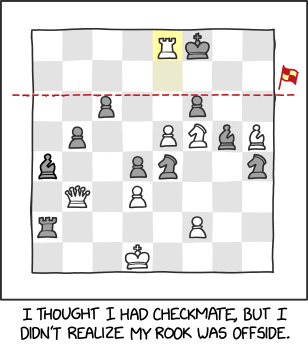
Unattributed bit of investigative journalism retrieved from Joanne Jacobs.
