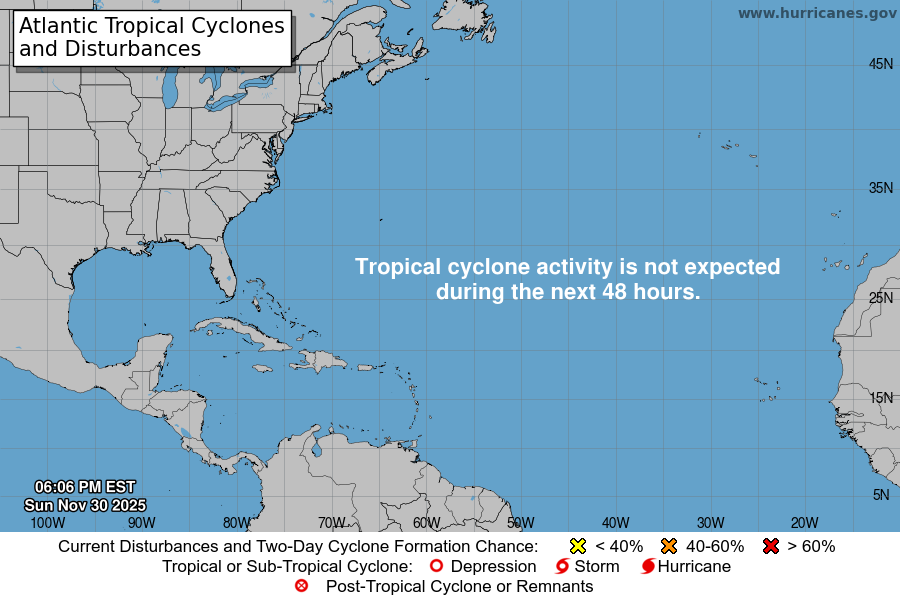
As of today, it is still Nichts Neues im Osten.

National Hurricane Center graphic retrieved from NOAA.
"Remarkably quiet."But The Narrative must be sustained.
The Atlantic has had no named storm formations since #Ernesto on August 12. The last time that the Atlantic had no named storm formations between August 13 - September 3 was in 1968. The remarkably quiet period for Atlantic #hurricane activity continues. pic.twitter.com/pLqE7I5PHn
— Philip Klotzbach (@philklotzbach) September 3, 2024
Earlier this year, the National Oceanic and Atmospheric Administration predicted a very active Atlantic hurricane season for 2024.What would we ever do without experts? There's still a lot of hurricane season to run, and Saharan dust is as good an ad-hoc explanation as any for the time being. We still have to be afraid.
One of the explanations for the lack of storm systems forming in the Atlantic Basin in recent weeks is due to the Saharan Dust moving across the Atlantic Ocean, scientists say. Large Saharan dust outbreaks brought widespread, intense plumes of dust and lots of dry air across the tropical Atlantic during July and much of August, Ed Nowottnick, an atmospheric scientist at NASA’s Goddard Space Flight Center, told ABC News.
Tropical waves have been exiting the African continent so far north that they have been pulling in lots of dust and dry air, limiting their chances for development, according to researchers at tropical weather experts at Colorado State University.
Below-average activity remains likely over the next two weeks, according to tropical weather experts at Colorado State University. However, the seasonal forecast remains on track to be above average in the end, after a couple more weeks of usually quiet conditions, they said.Well, no, as long as the grant money keeps coming, and as long as the review boards approving the grants hew to their priors, the experts will continue to recite the party line. There might even be another anomaly in the top drawer ready to refer to.
Towards the middle of the month, large-scale environmental conditions look to become more favorable for tropical cyclone activity in the Atlantic Basin.
Multiple tropical disturbances are currently being monitored for potential development in the Atlantic Basin. But, the latest update from the National Hurricane Center indicates that they all have a low chance of development over the next seven days.
There are still no major concerns or threats at this time.
Numerous factors play an important role in tropical cyclone activity and a seasonal outlook. This year, the end of El Niño giving way to a developing La Niña event in the equatorial eastern Pacific, near-record warm ocean temperatures across much of the Atlantic Basin, and above-average African monsoon activity were all primary reasons for this forecast.We'll revisit this story after Oktoberfest.




No comments:
Post a Comment