
Face it, dear reader, that one is pretty well executed. More commonly, somebody uses electrical tape to turn a 3 into an 8.
Strong Towns posts have long been confirming something that has bothered me for nearly forty years.
Eric Olson explains the phenomenon to readers of DeKalb's Daily Chronicle.So it proves to be, deep in the heart of Texas.After driving long enough on a regular basis, people tend to develop a kind of intuition about what the speed limit should be in an area just by surveying how many lanes there are, what kind of pavement there is, how many stoplights there are, whether the road is in the country or in town.What intrigues him is the proposal by Sycamore authorities to reduce the speed limit on a stretch of road that's signed for 45 yet winds around in such a way as to appear more safe at 40 or so. What's more commonly the case in Illinois is roads that provide visual cues to go faster. Such roads, which perhaps might better be described as stroads, have speed limits that appear to be too low.
The challenge is real — set speed limits too low, and drivers ignore them. Set them too high, and pedestrians and cyclists are left vulnerable. A recent incident in Houston drives home the point that signs alone are not the solution.At the risk of getting social-sciency, might that stretch of stroad be the one where people sneak a peek at their devices while transiting the relatively free space between traffic lights?
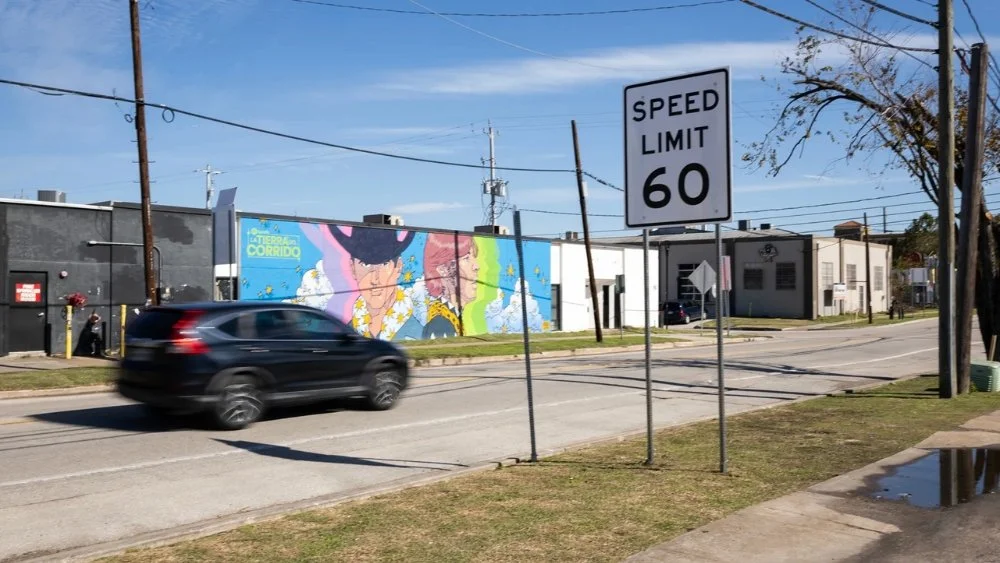
As originally reported by Akhil Ganesh with Houston Landing, on a quiet stretch of Polk Street, a mysterious plastic sign appeared, raising the speed limit to 60 mph — double the actual limit. Drivers didn’t react. Most didn’t even seem to notice. It was business as usual, with cars moving at their usual pace. The city quickly replaced the sign, but the incident revealed a deeper truth: Signs don’t change behavior. Design does.
Street design dictates how fast people drive and how safe they feel. A wide, straight road invites speeding, regardless of the posted limit. Narrower lanes, tighter corners, and visual cues like trees and streetlights naturally slow traffic. Yet, many professionals remain stuck relying on ineffective signage instead of redesigning streets for safety.




No comments:
Post a Comment