4.9.25

THE NEW ACELA IS SLOW.

The latest set of Amtrak fixed-formation electric trains are going into service, and although their suspensions have been improved to allow top speeds of 160 mph either side of Providence and 160 mph in the vicinity of Princeton Junction, they're still hampered by the nineteenth-century track they run on.
The existing track is twisty because it was stitched together out of numerous older railroads, many of which were optimized to the technology of the 1840s, and which originally existed to haul manufactured goods from town to port. The Washington to New York still uses Civil War era routes and tunnels through Baltimore that are almost that old. The electrification on that segment was added during the Depression, using Reconstruction Finance Corporation money. It was enough of an improvement to handle the logistics of World War II. But a high speed line? No. In Depression and War, the fastest and most flexible corridor service in the world was Chicago to St. Paul via four different routes. The New York to New Haven is primarily a commuter railroad that became electrically operated (primarily to comply with Manhattan smoke ordinances) early in the twentieth century. North of New Haven, there is a state-of-the-art electrical distribution system, but the rights of way date to railroading's Pleistocene era. Most of Rhode Island was still empty in those days, making straight line operation possible and providing today's racetrack for the Acela. But the right of way suitable for a high speed line is ... that of Interstate 95. The New Haven Railroad once acquired sufficient real estate for a faster line through Connecticut and western Rhode Island, but, to obtain temporary succour, it sold that real estate to the turnpike authority and then turned a freight profit hauling building materials.
An illustrated elaboration with the distressing details is available for your reading pleasure. "The biggest issues with this section are typically the wires, the age of the infrastructure, and sharing the inconsistent number of tracks."  For example, the Manhattan Gateway is still as Alexander J. Cassatt envisioned it around 1905.
First, we have the Dock Bridge, immediately outside Newark Penn Station, that will be getting a revamp for capacity and strength.

Second, we have the Sawtooth Bridges, east of Newark. These structures are over a century old, and are only double-tracked, but are being given 2 extra tracks, including more separation between the carriers that use it.

Third, we have the Portal Bridge, another century-old structure that’s currently being replaced by the Portal North Bridge directly next to it over the Hackensack River.

Fourth, and I’d argue most notably, the tunnels under the Hudson River.
Dock Bridge is an interesting bit of railway engineering, it is set up to provide a path for PATH (the old Hudson and Manhattan) trains for or from Newark even when the span is raised to clear most Hackensack River traffic; the four former Pennsylvania Railroad tracks get boated.  Portal is an old two-track swing bridge and the machinery is wearing out.  Sawtooth and the North River tunnels are a survival of the Standard Railroad of the World.  Commuter trains leaving Newark would head into Exchange Place station in Hoboken, leaving the tunnels for long distance Pennsylvania Railroad trains.  These days, though, the commuter trains share the tunnels with Amtrak's trains, and single-seat service trains off the Erie-Lackawanna get into the mix at Secaucus.

North of The Pennsylvania Station, those continual curves of the original New Haven Shore Line take their toll.  "Despite rocketing toward Providence at speeds approaching 160mph, the Acela’s average speed between New Haven, CT and Providence, RI is a meandering 68mph."  Any time savings over Amtrak's regional trains come from skipping stops such as New London or Westerly that the regionals make.  But the trains call at Metro Park in New Jersey and Route 128 near Boston, which perplexes the author of the post.  Simplest explanation: not all train riders travel city center to city center, and a peripheral parking lot near an expressway (Metro Park or 128) or an airport (Baltimore-Washington on the Northeast Corridor, Milwaukee Airport on the Hiawatha line) offers that sort of passenger a convenience.

The author of the post calls on readers to volunteer to open their wallets.  "As an American public, it is ultimately up to us to make our elected officials aware of our desire for our tax dollars to be spent responsibly and properly when it comes to passenger rail infrastructure."  That's a Cold Spring Shops point from six years ago.  "But nobody wants to put any money into more direct trackage. News flash: widening the turnpikes isn't going to help either."  Moreover, the road socialism the author contrasts with the penurious appropriations for Amtrak isn't the flex he thinks it is.  "The U.S. interstate highway system took $2 trillion and more than 60 years to complete. $25 billion in one-time capital spending for Amtrak isn’t going to get us even remotely close to what the average NEC train passenger deserves or expects."  The Interstate Highway System is crumbling under the weight of the ever-heavier semi-trailers clogging it, and the political support for spending more on it might not be there either.

PUT NOT YOUR FAITH IN EXPERTS.

We repeatedly ask, "What would we ever do without experts?" and we do so more in sorrow than in anger.  "Thus, the Fatal Conceit of the latter-day Platonists (the self-styled progressives) is in creating that cadre of Wise Experts who are going to protect the masses from their own foolishness."  We thus welcome "Another Reason Not to Trust the ‘Experts’"  Particularly because pronouncements from organizations claiming to represent Expertise have a lot of members who, in the manner of Junior Birdmen, sent their boxtops in.  "Five boxtops, Four bottle bottoms, Three wrappers, Two labels, And one thin dime!" Partridge in a pear tree optional.
One of the great lessons of the past decade is that when you read a variation of “experts say” in a headline, you ought to think twice and for yourself.

This week, the International Association of Genocide Scholars (IAGS) voted on a resolution that accused Israel of committing genocide in its war against Hamas. Like moths to a flame, the mainstream press ran wild with the story of the organization’s declaration.
To be precise, the usual suspects within the mainstream press, you know, the organizations that are bent on baiting Our President into calling them fake news.
The Guardian quoted the president of the association, Melanie O’Brien, declaring that the resolution represented “a definitive statement from experts in the field of genocide studies that what is going on on the ground in Gaza is genocide.” In another interview with ABC News Australia, O’Brien boasted that the resolution passed with nearly 90 percent support.
There might be people within that organization with solid academic accomplishments and diplomatic experience.  These days, though, it takes more than a thin dime to become a member.
Let’s start with the organization itself. According to O’Brien, the members of her organization “mainly consist of people who are academics, so scholarly experts, but our membership is also made up of people who come from different communities within the field of genocide prevention, education, and punishment.”

On Tuesday evening, Salo Aizenberg, a board member of Honest Reporting and contributor to NGO Monitor, tested that proposition. After exploring the IAGS website, he found that he could become a member of the organization with just a $30 contribution. “This organization that purports to be a leading organization of scholars is open to anyone who is interested,” he told The Free Press.

After Aizenberg posted about his new membership to X, others joined in on the fun. Newly minted genocide scholars now include Emperor Palpatine, the villain of the Star Wars franchise; Adolf Hitler of Gaza City; and our favorite, “Mo Cookie,” who turns out to be the Cookie Monster wearing a green scarf with the Hamas logo.
And even with all that, and no boxtops or bottlecaps required, the membership is around 500 with fewer than 200 signatories to the declaration.  The general lesson, though, applies to any other invocation of Experts.
Whatever one wants to call this, it’s not scholarship. But it’s also—at this point—to be expected. To read a headline with “[Insert Topic], Experts Say” today begs disbelief on the part of the reader, in part because of stories like this one. Activists are dressed up as scholars and subject matter experts, and their words are taken as gospel in news reports.
Newsies can go shopping for sympathetic "experts" who will provide impressive sounding explanations in support of whatever Narrative the newsie in question seeks to support.  It all makes for more work for people who seek an approximation of the truth, because deconstruction of coherent beliefs simply compounds the incoherence.

3.9.25

COMPARE AND CONTRAST.

Pajamas Media contributor Jamie K. Wilson offers one system of belief under the rubric of "toxic masculinity."
Walk into almost any school today, and you’ll see it: boys being told, in a hundred subtle ways, that their very nature is a problem. They’re too loud. Too restless. Too competitive. Too aggressive. If they’re not sitting still and coloring quietly, something must be wrong with them.

The phrases we use are damning — toxic masculinity, patriarchy, problematic behavior. And the message comes through loud and clear: There is something inherently bad about being a boy.

It doesn’t stop at the classroom. Media and advertising make fathers look like bumbling idiots. Hollywood pushes anti-masculine agendas, praising movies with girlbosses and trans messaging. Publishers, under pressure to meet ideological quotas, push books that prize grievance or identity politics over adventure and responsibility. Contemporary children’s series feature main characters who are passive, self-absorbed, or perpetually “discovering” new identities — while the daring, loyal, adventurous boy hero has all but vanished.

Taken together, schools, teachers, culture, and publishing form an echo chamber that tells boys, You are guilty before you’ve even begun.

Narrative psychology would predict the result. This is the field that studies how the stories we tell ourselves shape who we are. People build their identities like a story, with characters, conflicts, and resolutions drawn from the tales around them.

When you hand children a story of shame, they internalize it. Some will suppress their instincts until they can barely function. Others will rebel by embracing destructive caricatures of manhood, because that is the only model of strength they see. And some learn to hate themselves and their bodies so much that they embrace transgender ideology, believing escape from boyhood is their only hope of acceptance.

Either way, their true nature is submerged, drowned under a world that demands they be tame, quiet, compliant — and, frankly, feminine. This isn’t just bad for boys; it’s bad for all of us. Civilization needs both halves of humanity, masculine and feminine, yin and yang. Cut one off, and the whole body limps.
Common Dreams contributor Ishimwe Felicien offers a second belief system.
According to the Centers for Disease Control and Prevention, suicide is now the second leading cause of death among males aged 15-29, and suicide rates among young men in the US have risen by roughly a third since 2010. Across much of Africa, where I work as a public health and gender equality practitioner, men make up the vast majority of suicide deaths, and in Lesotho, the country with the highest suicide rate globally, men are dying at three times the rate of women.

Rigid gender roles may be to blame. Masculine representations rooted in ideals that reward toughness, emotional suppression, and dominance are quietly accelerating a mental health crisis among young men. These rigid norms don’t simply discourage boys from seeking help; they actively shame vulnerability, equate emotional expression with weakness, and isolate those who are struggling. In cultures where being “a real man” means staying silent, mental distress festers in the dark. Unless we confront and transform these harmful ideals, any global response to youth mental health will be incomplete—and too late for many.
Those two belief systems might well be irreconcilable.  Mr Wilson proposes exposing young boys to those masculine representations.  "Little boys don’t need moral lectures—they need imagination, loyalty, and persistence."
[Stories that] teach boys that their energy and strength are not shameful but essential — when channeled through honor and sacrifice. They remind girls that courage, loyalty, and virtue are not limited to one sex. They give both boys and girls heroes to look up to, adventures to imitate, and virtues to practice. And parents and grandparents can discuss the stories later, ensuring their young ones absorb the great lessons inherent in these works.

This is also why publishing new works matters. The classics are irreplaceable, but children deserve fresh stories that carry the same moral weight.
In Africa, though, there's too much honor and sacrifice and not enough feminism.
This means introducing gender-transformative education that teaches emotional literacy and normalizes help seeking as strength. We need male-friendly, culturally grounded safe spaces in schools, sports clubs, faith groups, and online where boys can be vulnerable without judgment. Mental health professionals must adopt gender transformative approaches that understand masculinity’s impact on behavior.

Above all, media and storytelling must shift the narrative so boys grow up knowing that feeling is not failure. Imagine a generation of boys brave enough to ask for help, a future where strength includes compassion, and manhood means connection, not isolation. This is the future we owe boys and men. No young man should have to choose between silence and survival.
It seems, though, that it's the absence of opportunities for boys to become men, whether by the machinations of the Caring Classes in the United States and other rich countries, or by the absence of emergence and market economies in Africa, that is behind the troubles with boys.
In many parts of Africa, young men grow up under intense pressure to become providers, protectors, and problem-solvers. These roles and expectations are deeply tied to their perceived worth. But when systemic barriers like poverty, unemployment, or lack of education make these ideals unreachable, the emotional toll can be devastating. With mental health services scarce and stigma-free spaces almost nonexistent, many suffer in silence.

Instead of seeking support through therapy or confiding in someone they trust, many young men cope with inner distress by turning to alcohol, aggression, or silent withdrawal. These internalized ideals of “staying strong” act like slow-burning fuses. Left unaddressed, emotional strain builds until it erupts often into breakdowns, which spiral into isolation, and eventually, into tragedy. Many of these young men appear perfectly “fine” on the surface, attending school, church, or work, making it easy for their pain to go unnoticed, even by those closest to them. While many girls and young women are increasingly accessing mental health resources even in under-resourced settings, young men remain notably absent from these services.
I don't know, maybe if you stop telling boys that they're toxic, you'll get better-adjusted men.

A FISKING.

Former University of Kentucky swimmer Riley Gaines has been doing women's sports a solid.
Riley Gaines has taken up the cause of keeping crossers with residual male musculature out of women's sports.  That's having salutary effects on public perceptions of higher education.  "If you're going to deny coherent beliefs, everybody else has to be in on the con.  A gratifyingly large cohort of current students is not.  Nor should they respect anyone, holder of a terminal degree or not, who is condescending, disrespectful, or too full of himself."
For taking up that cause, she has apparently crossed Ruth Graham, Dallas stringer with New York's Times.  "The former college swimmer has used her race against Lia Thomas, a trans athlete, to propel her career as an influential, and unsparing, activist."

2.9.25

CONCLUDING SCHÜTZENFEST SEASON.

We've noted the continuation of Prussian military traditions in the local Schützenfest street parades, and so too with the closing ceremonies, the Großer Zapfenstreich.  The title literally refers to the drawing of a string to finish the tapping of the beer, although it is the military equivalent of securing the colors with Retreat.


Usually the Zapfenstreich occurs after dark, hence the torchbearers, and traditionally after the national anthem comes Beethoven's Yorkscher March.

With the Germans again establishing a presence in Livonia, and recently resuming conscription, it's possible we'll be seeing those Prussian military traditions more frequently.

WE'RE BETTER PEOPLE. WE CARE MORE.

Rush Limbaugh had at least one opportunity a week to call out the Smug Intellectuals who took that stance.
Collectivists (those who stand for government control of the means of production and how people live their lives) promise heaven but deliver hell. For them, the promised end justifies the means.”

Meaning, it doesn’t matter how many times our programs don’t work. It doesn’t matter how many times our programs fail. It doesn’t matter how much misery our programs cost and cause, it is our intentions that you must examine, our good intentions. We are good people. We are better people than you. We care more. We love more. We are more tolerant and we know what’s better for you than you do, and we want, and we demand, and we will make. And whenever it fails we’re not allowed to examine the details of the failure. We’re always supposed to focus on their good intentions. The promised end, that carrot dangling way out there in the future, all this utopia that they claim to be able to bring, it never happens.
Arnold Kling runs with a variation on that argument.  Are you ready for a throw-down?
My sense is that the central dogma of partisan Democrats is that they are the best political party because they are morally and intellectually superior to other Americans.  Contemplating otherwise is as difficult for the moderate wing of Klein and Yglesias as it is for the wokest of the woke.

The classic analysis of this core belief is Thomas Sowell’s The Vision of the Anointed: Self-Congratulation as a Basis for Social Policy.  Sowell argues that people on the left who are politically engaged behave as if they were anointed with wisdom that others lack.  This belief is so strongly held that nothing counts as evidence against it.  It is an axiom, not an empirically falsifiable proposition.

The anointed see opposition not in terms of a mere difference of opinion.  It is illegitimate.  Their yard signs that say “We believe” in science, justice, and so on are nothing less than an accusation that you don’t believe in such things unless you are on their team.

Voltaire supposedly said something like “I may disagree with what you say, but I will defend to the death your right to say it.”  The anointed will instead condemn what you say as hate speech or misinformation.
Strong stuff.  It's possible that the people who consider themselves "anointed" proffer what they consider "sophisticated" or "nuanced" arguments in support of their positions, and they understand just enough of their own position to be able to brush off most objections as "simplistic."  That "intellectual superiority?"  Credentials, carefully burnished.  Think of the institutions that top the U.S. News league tables as tack rooms where graduates are issued their boots and spurs and turned loose to saddle and ride the "benighted."  Never mind that those people are, to borrow from Salena Zito, "highly educated scolds" who cling to their "ideologies and abstractions."  Which is to say, simplistic thinking dressed up in wordnoise.


It's all too much for Mr Kling.
For the anointed, losing the confidence of the public is like falling off a horse. The “abundance movement” is, like the ill-fated Robert F. Kennedy candidacy, a campaign to get the anointed back on to the horse.

The blind spot of the anointed is their inability to see that they do not belong on the horse to begin with. There is no class of Americans that is morally and intellectually superior to everyone else. Instead, each of us should be modest about what we claim to be the best way to approach political problems.

You can stir up resentment in America by talking about inequality. You can rail against “oligarchs,” landlords, and grocery stores. Or you can champion “abundance,” meaning the ability of government to build things without its own regulations getting in the way. But if you do so from the standpoint of assuming your own moral and intellectual superiority, you will find your popularity is limited, and deservedly so.
To which I can only add, "sophisticated" and "nuanced" are highfalutin' ways of describing "complicated" and "wrong" and "dressed up in wordnoise," which I refer to as "inclusive euphemism" and Pajamas Media's Jamie Wilson calls the euphemism treadmill.  "The fight for language is the fight for reality itself. If we lose our words, we lose our world."

NONE DARE CALL IT GENTRIFICATION.

A long time ago, when Our Political Masters still had illusions of nation building, I opted to be provocative.
I claim no expertise in matters geopolitical, but wish to observe that the liberation of Iraq has a lot in common with urban gentrification[Say what??] (Bear with me)  People who get into urban gentrification like to find fancy old houses that they can buy on the cheap and fix up over the course of years. That often involves living in neighborhoods that are, well, trashed. From my experience with the phenomenon, such people do not like to be thought of as urban pioneers, as that image gives the suggestion that all was wilderness before they came. Think of Iraq as a fixer-upper in an old neighborhood (goes back to the Garden of Eden and Hammurabi and Scheherezade.) It's a fixer-upper with a lot of potential (some of the upper-middle-class Baghdad neighborhoods I saw in the 1991 Gulf War coverage had a Californian look to them, and the schools and agriculture and energy industries used to work well, although it has been a few years since the Baghdad Orient Express left for Istanbul.) One of the downsides of gentrification is that your work will attract the attention of thieves, and you might have to exercise some effort to persuade the dope peddlers and hookers to ply their trade elsewhere. (Substitute Islamofascists and Ba'athist nostalgics.) Thus, expect some trouble. The difficult test will be for the coalition to find the right mix of power and example to deal with the trouble (sometimes you have to send in the cops and take a few crack houses down, sometimes success in one neighborhood will lead to imitation in other neighborhoods.)
That didn't turn out too well for the Iraqis, whether Arab, Kurd, or any other ethnicity.

EIGHTY YEARS AGO.

This is what victory looks like.


USS Missouri in Tokyo Bay.
Unattributed photograph retrieved from Ace of Spades.

The way the surrender came to pass continues to provoke people.  There's a provocative hypothesis nailed to Newmark's Door:  "Did the Nagasaki bomber ‘miss’ on purpose to save lives?"

28.8.25

BACK TO SCHOOL.

Yes, there are lots of Eventful Things going on.  Those can wait for next month.  We'll close out August, and the summer season, with the University of Wisconsin Marching Band playing their way off a heritage trolley.


Enjoy the long weekend.  Find yourself a preservation railway and ride it.

ON MY WORKBENCH.

There have been a few itinerant circuses touring the State Line this summer.  The Karlson Brothers Circus also went on tour, showing at the Circus Model Builders national gathering in Auburn, New York.

Years ago, when the model builders showed in Auburn, it was in an honest-to-Hoxie Tucker big top, complete with ten large scale circus wagons alongside the models in more easily transported scales.  The summer show was in the Finger Lakes Mall, which in the manner of malls nationwide, has a lot of vacant space available for banquets or exhibitions.


There was light foot traffic through the show hall the three days of the show, and there was ample time to do model building.

27.8.25

HOW DO YOU SCOUT BLOCKING AND TACKLING?

So ran the lament during the Lombardi era in Green Bay.

There are fundamentals in baseball as well.
People in baseball keep warning me: Don’t get carried away with the Milwaukee Brewers.

The Brewers’ batted-ball luck is insane, they say. Their 53-17 record since May 24 might be a classic case of peaking early. Come the postseason, they could be headed for another quick flameout.

All true. But even though the Brewers’ 14-game winning streak ended Sunday with a 3-2 loss to the Cincinnati Reds in 10 innings, their record is best in the majors by six games. The team that opened the season with the sport’s eighth lowest payroll is putting the competition to shame.

There’s a lesson here, if anyone in baseball cares to heed it. The lesson is in every ball the Brewers put in play and every runner they advance, every cutoff man they hit and every extra base they take. The Brewers are not perfect – Sunday’s loss included a critical error to open the ninth by Brice Turang at shortstop and two botched bunts in the late innings. But they at least try to play the game properly at a time when most teams place too little emphasis on fundamentals and too much on the next big analytical thing.
Baseball is a different sort of game, in that you can't put the ball in Bart Starr's or Giannis's hands in a tight situation, and beginning players ought be coached in Little League (and here is where the helicopter parents really ought chill) in the ways each player can keep the line moving, or stop the other team's line from moving.
Can someone please explain why clubs fixate on enhancing pitchers’ fastball velocities and hitters’ exit velocities but fail to properly instruct players on running the bases and hitting the cutoff man? Why can’t organizations focus on both?

The Brewers are an outlier, exploiting a new market inefficiency – knowing how to play baseball. They obsess over little things, in part, because they generally do not pay for superstars who do big things. Most Brewers make too little money and possess too little service time to defy their detail-oriented leader, manager Pat Murphy. And the team’s highest-paid player, left fielder Christian Yelich, practices what Murphy preaches, inspiring his teammates to do the same.
The advantage in the playoffs might be with the big payrolls, and yet if you take care of the base running and the position of fielders on each ball put in play, the World Series might take care of itself.
The Brewers entered Sunday tied for fifth in sacrifice bunts and sixth in sacrifice flies, and also were second in stolen bases. They scrap. They drive opponents to distraction. They beat teams in any number of ways.

“I think we need to take a page out of the Brewers’ book,” Pittsburgh Pirates right fielder Bryan Reynolds said Wednesday. “They just do everything right. They base run, they take the extra base, they put the ball in play, swing at strikes. I think we could benefit a lot from trying to have the same kind of game style.”

It’s not just the small-market teams that could benefit, it’s every team. Here’s to the little things that make baseball beautiful. Here’s to baseball’s version of David using slingshots on the sport’s Goliaths. Here’s to the Brewers, however long they continue the fun.
Indeed.

IN SIGHT IT MUST BE RIGHT.

It took Canadian Pacific nearly twenty years to scrap their motion mark and restore the beaver to their herald.  Cracker Barrel thought better of their meaningless mod, and the current herald shall remain.  Was it "customer backlash?"  "Conservative backlash?"  "Right-wing backlash?"  Or none of the above?  "When people get tired of things being broken, they seek to restore a state of good repair."

Perhaps, as Pajamas Media's Matt Margolis argues, it was much ado about very little.
To me, this looks more like a fairly common branding move than culture warfare—though plenty of people are eager to frame it that way.

The logo change comes as part of bigger shifts inside Cracker Barrel. Over the past year, dozens of locations have been remodeled with a brighter, more modern interior design aimed at drawing younger diners. To longtime customers, that feels like betrayal; to the boardroom, it looks like survival.

Rebrands always carry risk. Some companies pull off modern updates, others flop—but in an age of sleek, minimalist branding built for smartphones and social media, Cracker Barrel is hardly the first to try.

The problem is that chasing trends often means alienating the very customers who made you successful. That’s exactly what happened here. It happens.

For me, though, this isn’t a hill conservatives need to die on. Sure, Cracker Barrel has pandered to the left before, and the new logo is unimpressive. But does it really change your life? There are real battles in the culture war worth fighting—a restaurant chain’s sloppy logo refresh isn’t one of them.
Perhaps so, although in a world of consumers weary of service degradation being spun as an "improved experience" or something similar, that it was Cracker Barrel's remaining diners pushing back might be part of a general trend of the Normals saying Enough to Their Progressive Betters.

25.8.25

CIRCUS DAYS.

At the beginning of summer, the Carden International Circus worked with the Zor Shrine Temple to put on a performance in Janesville, Wisconsin.

The Culpepper and Merriweather Circus have also been touring the State Line, and on August 10 had a muddy lot in Richland Center and a large turnout of children of all ages to entertain.


The training thunderstorms that caused a great deal of havoc in Milwaukee and drenched the interstate highways in the Rockford area mostly went to the southeast, thus the people of Richland County weren't worrying about flooded basements.

MEANINGLESS MOD.

Once upon a time, Canada meant red-coated Mounties and Canadian Pacific trains tackling the Selkirks and the Rockies.  From far and wide, a beaver stood on guard for that company.


Sometime during the declining years of the American High, a lot of railroads engaged in makeovers, sometimes, it seemed, to conceal the fact that they even were railroads.  It might have been putting new paint on rusty steel without chipping it first.
Had the Tonight Show recorded in Boston, the whole country would know about the Boston & Maine and New Haven of the era.  "Herbert Matter could put new paint on the New Haven and on the Boston and Maine, but if the trains were unreliable, it made no difference."

What of Lippincott and Marguiles?  "There were other memorable railroad image updates, some of them tied to Lippincott & Margulies. One was notorious, the “mating worms” logo of the new Penn Central of 1968. Another was Amtrak’s “pointless arrow” and patriotic red, white, and blue of 1971."
Canadian Pacific, which at the time was a transportation company flying planes, sailing Empress class ocean liners on the seven seas, operating trucks to go where the trains did not (something that was heavily regulated Stateside) and for all I know stabling sled dogs to meet the trucks where the road ended and the snow pack began, and operating hotels in the big cities and the resorts of the Rockies, engaged in one of those image updates, in which lots of money went into creative types coming up with a Motion Mark.


These were colour-coded, orange for the Concorde they never flew and the conventional jets they did fly, green for the funnels (a square shape on a raked funnel is an abomination, but that's the way they sailed) and brown or gold for the china at the hotels.

With that background in mind, dear reader, let us contemplate, with Pajamas Media's Matt Margolis, Cracker Barrel's simplified herald.
When Cracker Barrel unveiled its new logo this week, the company framed it as a blend of tradition and progress. Conservatives, however, erupted with outrage. Personally, I think folks need to take a breath, and I’m going to tell you why. I have a feeling many of you won’t agree with me, but hear me out.

“Anchored in Cracker Barrel’s signature gold and brown tones, the updated visuals will appear across menus and marketing collateral, including the fifth evolution of the brand’s logo, which is now rooted even more closely to the iconic barrel shape and word mark that started it all,” the company explained in a press release.
It's the same sort of corporate-speak that accompanies the roll-out of a new herald, whether at a corporation or at a university.  Northern Illinois University was way ahead of Cracker Barrel coming up with a simplified herald that looked like a Stratego piece the better to conserve pixels on their web page.  The faculty didn't like it, but, oh, well.

WOKE RUINS EVERYTHING IT TOUCHES.

The latest in metrofexual silliness, courtesy of Vox.  "Gen Z created a new type of man to avoid."  Well, yes, if you apply the concept of "man" loosely.
If you live in a major city, you might have seen what looks like a hipster drag show playing out in a park or on a sidewalk recently: a parade of young men strutting with tote bags, holding up feminist literature, and showing off their newly purchased vinyls.

That guess wouldn’t be totally wrong. Over the past month, Gen Z has been holding public contests all over the country, and even internationally, awarding the best impressions of a “performative male,” the latest meme taking off on TikTok.

The slang is a bit misleading. A “performative male” doesn’t perform traditional masculinity à la a “gym bro.” Rather, he’s curated a notably alt, intellectual, and, in Gen Z terms, “soft” aesthetic, often with the purpose of attracting progressive women. Other markers of a “performative male” include drinking matcha, reading bell hooks, listening to women singer-songwriters, and carrying emergency tampons.
Figures.  Once upon a time it was bad form to refer to strident women or mincing men, and now perhaps the mincing men are attempting to score with the strident women.  Or not.
The trend seems to be largely in good fun, poking fun at men who do, in fact, genuinely like matcha and Mitski. It’s partially inspired by the slew of celebrity lookalike contests last year that highlighted people’s enjoyment of dressing up in silly costumes, as well as their desire for a public square. As Seattle’s “performative male” contest winner, Malik Marcus Jernigan, told me, most of the men participating, including himself, casually embody the joke.

“My friend had sent me the flyer saying I had a good chance at winning, so I decided to participate to make them proud,” says Jernigan, a 24-year-old musician. “I feel as if for the most part it is either ‘performative males’ poking fun at themselves or women poking fun at them online — all lighthearted in nature.”
The article being a Vox article, you just know that the culture studies types are going to inject themselves, and not in a good way.
But there’s also a darker interpretation: Maybe these men are not what they seem, and perhaps their tastes and behaviors are all a deception. The “performative male” has joined a group of suspicious masculine archetypes that came before it, like the two-faced “wife guy” and toxic “male manipulator.”

So how did these signifiers of a “performative male” come to fall under suspicion? Should you really be worried about dating a man who listens to Clairo? Is it so bad to be “performative,” when gender is inherently a performance?

From “hipsters” to “soft boys” to its more derogatory offshoot, “cuckboi,” the internet has long questioned the integrity of this genre of men who eschew traditional representations of masculinity, either through their personal style or consumption habits.

In the age of TikTok, the average person, even one who doesn’t live in Bushwick, has become a lot more familiar with men who embrace a sense of freedom around gender. According to Jordan Foster, assistant professor of sociology at MacEwan University, the app has given average men a “historically novel public visibility, making a significant difference to their public presentation and also their ability to play with their gender presentation.”

Still, this exposure to and wider acceptance of this genre of men hasn’t exactly made us less confused about them. On the one hand, they’re often assumed to be emotionally intelligent and “unproblematic,” politically progressive if not outrightly feminist. But is it really all an act?
Of course it all is.  Remember "Chicks say yes to guys who say no?"  Or Blind Date with the bad boys getting all the reality TV action?  So there might be a few people genuinely unburdened by any sense of convention, and there might be lots of players.  As well as a few Minimal Publishable Units.
It seems like the internet is caught in a perpetual cycle of glorifying and later questioning the integrity of these men whenever they gain publicity. Pop singer Harry Styles, for example, was once lauded for dancing with men in his music videos and wearing feminine articles of clothing. For a time, though, he also faced charges of “queer-baiting,” a term to describe the appropriation of queer aesthetics by straight, cis men for their own personal and professional advantage.

Foster finds that skepticism around men who don these aesthetics is partly a conversation around privilege. “The critique is that men are reaping the sort of social and symbolic set of rewards for participating in these feminized and sometimes queer aesthetics without bearing any of the costs that have typically circled around queer and marginalized men or women,” Foster says.

It isn’t just that these signifiers seem strategic or shallow, but rather, they can read as misleading. The MeToo movement showed us that even supposed “nice guys” could be capable of alleged manipulation and abuse — that in fact, they could use their enlightenment as a kind of shield. Now, the kind of guy who goes to therapy while also treating his partner badly has become flattened into a starter-pack-style meme. And the faux-enlightened man has become a frequent observation in pop culture.

In what could be read as an effort to rehabilitate his image following allegations of domestic abuse from his ex-wife Angelina Jolie, Brad Pitt has taken on a more gender-fluid approach to fashion. Before actor Jonathan Majors received two misdemeanor charges in a domestic-violence case last year, he did a viral magazine shoot wearing all pink and discussed how his idea of masculinity involved “kindness” and “gentleness.” These were major celebrities with PR teams. Could their gender flexibility have been an attempt to ward off bad press? It’s impossible to say, but what observers have seen does color the discourse.
It came to this when "bourgeois" became a pejorative, didn't it?  Thus, "[M]any people have lost sight of what a healthy level of discernment in dating looks like."

22.8.25

ECHOES OF THE KAISER'S NAVY.

Schützenfest season continues, and here's video of Sunday's Königsparade (there are several excuses to break out the flags and the bands) from Dormagen-Delhoven, which is upriver a few kilometers from Düsseldorf.  I'm learning a few more things about the participants.  You'll see pioneers in seventeenth-century headgear carrying polished axes and saws; they would be clearing the way for the troops.  I've also seen more than one parade group in naval uniform carrying the Kaiser's version of the Navy Jack.


Those units all marched in the opening of the parade.

DON'T THEY KNOW THERE'S A WAR ON?

Reuters reports, "Parts of Russia face gasoline shortages after Ukraine struck refineries."  Apparently, the right kind of drone can sometimes get through.
Since early August, Ukraine has targeted a number of oil refineries including Novokuibyshevsk, Syzran, Ryazan and Volgograd in response to Moscow's missile and drone attacks.

In Russia's far eastern region of Primorye, local media reported lines stretching back kilometres (miles) as motorists queued to fill up with gasoline. Authorities blamed an influx of tourists.

NNK, an oil company, said many of its gasoline carriers in the region were stuck in traffic jams for three to six hours at a time due to repair works on the roads, according to local media.
Tourists, not refugees?  Additionally, there aren't many improved transcontinental roads into Siberia and the Far East.
Yevgeny Balitsky, Moscow-appointed governor of Ukraine's Zaporizhzhia region, which is mostly under Russian control, said on Thursday that gasoline retail sales in several areas were suffering problems because of peak demand and refinery maintenance.

"In the Zaporizhzhia region, the fuel shortage is further complicated by logistics issues and the threat of enemy attacks on fuel trains," he said.

Sergei Aksyonov, the head of Crimea - which Russia annexed from Ukraine in 2014 - also acknowledged fuel problems in an interview with a local TV station this week.

"This is an objective situation, which could last for up to a month more," he said, while adding that the issue would not be fully resolved until the conflict ends.
Russians might be more patient with their government.  I remember gripes, a few months into IRAQI FREEDOM, about the Army in Iraq and civilians at the mall.

WAIT THE CRAZIES OUT?

Outside the Beltway's Steven Taylor recognizes that the punishment cycles of the grim strategy outcome are playing out with the state legislatures engaging in unprecedented reapportionments of their Congressional districts.
It is an honest and disturbing sign of the times that there isn’t even a token attempt at justifying this behavior. Trump demands more seats; the party provides.

This will likely spark other states to follow suit. In the abstract, I don’t think any of this is good for the health of American democracy, but I also fear we have crossed a threshold in which tit-for-tat is unavoidable.

I am normatively opposed to this kind of manipulation and empirically think it is bad for representative democracy. The next likely move is by California, which will require a referendum to amend the state’s constitution.

It should be noted that the core problem with US House elections is that, for a number of reasons, they are not competitive, but are instead foregone conclusions on balance (only about 10% of seats in 2024 were truly competitive). This is a huge problem for American democracy, to the point that even without this mid-cycle manipulation, there are days when I wonder how democratic things are/have been. Making elections even more predestination instead of competitive takes us in the wrong direction on that count.
One of these days there will be a political scientist who looks at all the ways in which legislatures can go wrong, and how those ways proliferate as the population being governed increases, and come out with a vigorous endorsement of those Ninth and Tenth Amendment powers wherever possible?  Once the punishment cycles start, getting out, as he notes, is hard.  But he has his pet remedy (is there an academician, anywhere, who does not?)
The issue on the table to me, at this point, is not a debate about what is the best way to district; it is a question of whether one party should be allowed to further manipulate the system while the other party unilaterally disarms out of a sense of principle. And the context here is that the party seeking to further manipulate the system is actively supporting an authoritarian agenda.

As such, do voters in CA stand by and allow the pro-authoritarian party to further consolidate power, or do the voters of CA provide a somewhat anemic push to forestall that consolidation?

Given that Trump will have two full years to govern after the midterms, the question is, what can be done to at least slow him down? Democrats winning control of the House is probably the closest thing to a bulwark that can be generated against his onslaught on the system. Making an already highly flawed system to elect the House even more flawed, but in a way that fights authoritarianism and hopefully increases representativeness on the national level (even as it damages it on the state level), is worth the price, in my view.

Of course, I ultimately would prefer we move to multi-seat districts and [proportional representation] elections.
I'm waiting for the Fans of Parliament Caucus in the American Political Science Association to endorse an Article V Convention of the States in order to debate a resolution favoring such a restructuring of Congress.  That convention might be even more fun if the cube root rule came up.
Again, this is not new and is one of many problems with single-seat districts. There is no incentive for an elected representative to actually represent all of their constituents. Ironically, one of the arguments deployed against multi-seat districts is that citizens won’t know who “their” representative is, but the reality of winner-take-all single-seat districts is that the winner only feels the political need to represent their co-partisans (or, worse, just the faction that can re-nominate them in the primary). There is a reason, for example, as to why so many Republicans see no need to hold town halls these days.

Another aspect of the piece that should be raised, the authors ignore the fact that prior to the 1994 “Republican Revolution,” the Democratic Party was a far broader coalition of liberals and conservatives, and was dispersed geographically in ways that are no longer the case.
Expand the House, get more Lauren Boeberts and more Ilhan Omars.

INDIRECTLY ENDORSING A CORE CURRICULUM?

Matt "Dean Dad" Reed reconsiders the right to repeatedly fail.
If someone needs to fail calculus several times to figure out that engineering might not be the path for them, this camp would say, then so be it. Sometimes the ninth time is the charm. Failure may be the best teacher, but sometimes even the best teacher needs some repetition to get the point across.

Early in my career, I was sympathetic to this viewpoint. After all, it applies in many other spheres of endeavor. For example, it became brutally clear at a young age that professional baseball was not in my future; I indulged my right to fail nearly every time I swung a bat. Crashing out as hard as I did, as early as I did, spared me the frustration that many players feel later in life when they top out in the minor leagues but keep trying to redeem years of sunk cost. Sales positions involve rapid and frequent failure. Actors and comedians know well what it is to crater an audition or to bomb in front of a crowd. Learning what doesn’t work is part of learning what does. Why should academia be any different? Besides, some people are late bloomers, and community colleges are all about second chances.
We'll return, some other day, to why entertainment and organized sports can get away with high performance standards, while Soft America holds sway nearly everywhere else, including higher education.

20.8.25

ON EARTH AS IT IS IN HEAVEN.

Long-time Milwaukee Brewer announcer Bob Uecker, who departed this life in January, had a self-deprecating way of describing his career as a Major League catcher.  The story around Milwaukee these days is about the Heavenly Host hearing all about how well the Brewers have been playing since he left.

One of the few Brewers who knew last year how ill Mr Uecker was was outfielder and designated hitter Christian Yelich, who had a Bob Uecker bat made up for the 2024 Players Weekend.  (There are rules governing the use of special bats.)  Because of an injury, he could not use that bat last season.  Instead, he used the bat Friday evening in Cincinnati, when it looked like the winning streak would end at twelve games with the hamburgers secured.
Yes, the Crew rallied from seven down to win the game.
Milwaukee Brewers outfielder Christian Yelich went sicko mode on Friday night against the Cincinnati Reds, perhaps in part because of his bat.

Of course, that’s a necessary piece of equipment for any baseball player. You don’t do anything without a bat in your hand. But Yelich’s bat had an abnormal, yet special, twist from the normal Louisville Slugger you tend to see.

It’s Player’s Weekend in the MLB, which means that anyone who wants to make a bat with a special design can. Yelich chose to honor the late, legendary Brewers broadcaster Bob Uecker with his, after he passed in January 2025.
There must have been some magic in that special bat he found, because when he put it in his hands the team rallied 'round.
Evidently, that twig brought him some good luck. Yelich would go 4-5 on the night with two home runs and a double in a 10-8 win for the Brew Crew.
The Reds did end the Brewer winning streak at fourteen on Sunday and the Cubs still have a few things to say about the outcome of the division race.  The hamburgers are being served up in Milwaukee this afternoon.

BACK TO SCHOOL.

Donald "Cafe Hayek" Boudreaux offers a warm-up challenge to economics students.
[T]he naive protectionist (of which there are many today) will reply with what he or she supposes is a “Gotcha!” This protectionist will note the obvious fact that food is necessary for life. From this fact the protectionist will proceed to argue that if the nation isn’t producing enough food to feed its own people, the people of the nation are dependent upon foreigners for their very lives. This situation (the protectionist continues by asking about the event of war) is intolerable. “We must restrict food imports so that we once again build, here at home, the capacity to feed ourselves. We simply cannot be dependent on foreigners for something as vital as food.”

To economically uninformed people, this protectionist sounds reasonable, and perhaps even unanswerable. But economics alerts us to several problems with this protectionist way of thinking.

So here’s the contest. Using no more than 500 words, identify one of these several problems with this protectionist’s argument, and email your answer to me.
There might be more than one problem with the objection as he poses it, and his rules allow for keen students to identify more than one problem, but each problem merits a separate entry.  He will publish the best responses in some future post.

THE TRAGIC VISION COMES FOR C.J. POLYCHRONIOU.

He has often provided us with amusement, and more recently, with a taste of the desperation among self-styled progressives.  Now reality might be dawning.  "Ukraine and Gaza Confirm That the Post-War International Order Is Obsolete."

Well, yeah, Poly, you're a little late to the party.
Twenty years after Victory, the victory babies we knew as the Baby Boomers chafed at the regimentation of the American High, and perhaps their parents, who knew not how to exist without all that structure, vicariously enjoyed their children throwing it off.  And thus, to use the Fourth Turning typology, the Consciousness Revolution gives way to an unraveling of everything, and that eventually exposes the weaknesses of the old values regime.  "Normals put up with the nanny state as long as its nannying was limited in scope and duration.  Thus the 55 mph speed limits after the 1974 oil embargo or the security theater after the airplane hijackings or even the financial bailouts after affordable housing proved to be a sham did not prompt the rebellion."  Then came the corona tyranny.  The lies are the problem.  And "the public is becoming accustomed to being lied to."

That brings us to our present.  "Just like that, 'government is force' hit everyone in the face, and 'the Wise Experts ... aren't' dawned on more than a few among us.  And that, dear reader, is the way saecular orders fracture."
Poly, however, continues to hope for the Big Rock Candy Mountain.
Alexandra Boutri: Under what circumstances can you imagine the restructuring of the current world order architecture and the end of capitalism?

C. J. Polychroniou: Unfortunately, I cannot imagine the restructuring of the world order architecture or the end of capitalism in my own lifetime. Such radical transformations would mandate, first and foremost, the end of the nation-state and the subsequent rise of cosmopolitanism. The driving force behind the formation of the nation-state was capitalism itself, so the two are deeply intertwined even though global capitalism gives the impression that it seeks to transcend the nation-state framework but, in reality, depends on it for its own expansion. Be that as it may, the point is that neither international law nor the UN collective security system work in preventing wars and resolving conflicts. Certain progress in human affairs notwithstanding, we continue to live in a dark and brutal world.
Efforts to end the nation-state in favor of whatever that "cosmopolitanism" means might be the most effective way to make the darkness, and the brutality, worse.

WHAT'S NEXT, MORE BONUS ARMIES FOR HOLDING AFRICA?

When you start fretting about the Mercator Projection, you've probably run out of Third World Problems, or perhaps, you'd rather not deal.  "African Union Wants End to Mercator Projection Map Use Over 'Disinformation'."  For the reasons that anyone with a smattering of geographical knowledge is long familiar with.
“It might seem to be just a map, but in reality, it is not,” AU Commission deputy chairperson Selma Malika Haddadi told Reuters, saying the Mercator fostered a false impression that Africa was “marginal”, despite being the world’s second-largest continent by area, with over a billion people. The AU has 55 member states.

Such stereotypes influence media, education and policy, she said.

Criticism of the Mercator map is not new, but the ‘Correct The Map’ campaign led by advocacy groups Africa No Filter and Speak Up Africa has revived the debate, urging organisations to adopt the 2018 Equal Earth projection, which tries to reflect countries’ true sizes.

“The current size of the map of Africa is wrong,” Moky Makura, executive director of Africa No Filter, said. “It’s the world’s longest misinformation and disinformation campaign, and it just simply has to stop.”

Fara Ndiaye, co-founder of Speak Up Africa, said the Mercator affected Africans’ identity and pride, especially children who might encounter it early in school.
It's not that other projections haven't existed.  My grade school political geography book used the Goode homolosine projection with interruptions in the oceans to keep the major land masses together.  The front matter in that book explained the construction of the map as comparable to peeling an orange and keeping the skin flat.  It would not be useful as a map to plot a course from Alameda to Hong Kong by way of Midway, Wake, and Manila.  "On a Mercator projection, a meridian bears true (rather than magnetic) north and it appears as a straight line. On other projections, straight lines pose challenges, particularly where variation of longitude is concerned."  A Mercator projection preserves the orthogonality of east-west and north-south, at the expense of distortion of space away from the equator.  South America and Africa straddle the equator, thus their projection is to a smaller scale than Greenland or Australia.

19.8.25

MONEY-HEMORRHAGING JOKES RUN BY IDIOTS.

That's Margaret "University Diaries" Soltan referring to Ohio University's Richard Vedder calling attention to the money-suck that College Sports has become.  Some of those links might now be gone to the Happy Linking Grounds, but the self-destruction and self-beclowning of higher education, and the money-hemorrhaging, goes on and on.

Professor Vedder has continued to call attention, most recently in Let Colleges Fail: The Power of Creative Destruction in Higher Education, which is a follow-on-if-only-you-had-listened to his Going Broke by Degree: Why College Costs too Much of two decades ago.

I'm able to keep Book Review No. 7 brief as the "Ten Cardinal Sins" he enumerates to open Let Colleges Fail are the kind of thing regular readers of Cold Spring Shops have been hearing from me for years.  It's much easier sometimes to simply agree, and then sigh as we have been fighting it out along these lines for years and the craziness goes on and on and on.

CALVINBALL ONLY MAKES THE GRIDLOCK MORE AMUSING.

I usually present that position using more restrained language.
Dalibor Rohac, who writes for The Bulwark, provokes the reader.  "Too Much Democracy Is Killing Democracy."  His wish?  "A more boring politics, populated by forgettable yet basically competent figures instead of fame-craving clowns and provocateurs would be a great place to start."  These days, politics is anything but, whether in Hungary or the United States or ... France or Canada???

Darren of Right on the Left Coast reminds us, "Our governmental system is designed to ensure that passions are moderated."  That might be a good way to start a fight with political scientists.  Over the years I have had a few frank and open exchanges of views with political science types about things like voting efficiency and representation.  I've not yet figured out where positive political science leaves off and normative policy prescriptions begin.  Nevertheless, I maintain that political bundles are too big, and disequilibrium the most likely outcome.
It's amusing, though, to watch Democrats attempting to use the normative political science of their court intellectuals to rig the rules in such a way as to be able to rule forever.  "The Democrats have plans to expand the Supreme Court, eliminate the filibuster, and more."  Their latest It Girl without irony hopes Team Donk can prevent any more wild swings in policy from occurring.
It hasn't occurred to her, has it, that boldness plus overreach plus loosened restraints on changing laws will lead to course corrections far beyond what is possible now.  You think jamming changes through on bare majorities using reconciliation is annoying?  Try jamming all possible changes through on bare majorities.

THE STROAD IS THE CULPRIT.

We first noted the folly of North Carolina officialdom charging parents with child neglect when Reason's Lenore Skenazy called attention, as we'd expect Reason contributors do, to the excesses of the Nanny State.

The children involved in a fatal car crash were attempting to cross what is effectively a limited-access highway in Gastonia.
The "1000 block of West Hudson" is Hudson west of Lyon, and if the kids were headed from a residence southeast of that corner to the store on the northwest corner, they might have been hard-pressed to find a crosswalk along Hudson, let alone a sidewalk on the south side of Hudson.  Standard car-brain infrastructure, undoubtedly someone, somewhere, figured that nobody would be walking there.  Nobody bothers to walk there, no injury accidents to document in order to provide crosswalks or sidewalks, no crosswalks or sidewalks.  Then a kid goes there.  Thus, Gastonia; thus, downtown Springfield, Massachusetts.
There's more thinking to do about the "level of service" obsession of road planners.  Many of the exurbs that began as neighborhoods for people with disposable income have been left behind for a variety of reasons.  "[N]eighborhoods that might have been zoned in all earnestness for automobile owners to have become neighborhoods where car ownership is not necessarily a given for the new residents."

COMPLEX ADAPTIVE SYSTEMS DOING WHAT THEY PLEASE.

In "Hurricane Warning Warning," Power Line contributor Bill Glahn notes, "It’s that time of the year. Time to frighten everyone to death for every thunderstorm in the Atlantic basin for the next three months."  Or, perhaps, to give The Weather Channel travelling squad opportunities to travel, or perhaps to collect overtime.

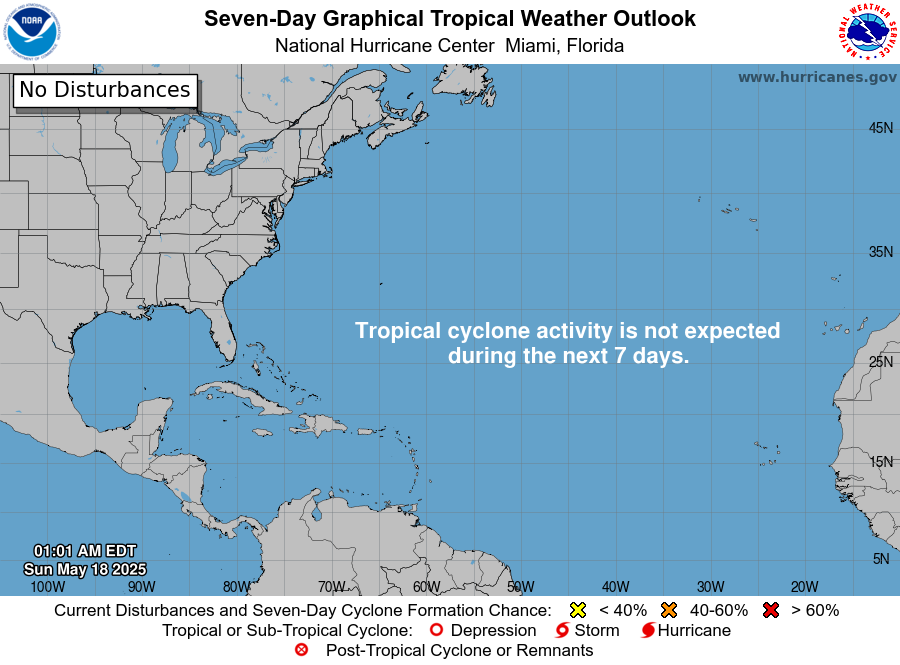
From the National Hurricane Center, the state of play as of midafternoon Tuesday, is Erin drawing on lots of warm sea water and causing beach warnings along the Outer Banks.


Mr Glahn continues,
Media outlets are desperate for clicks, but few readers will feel the impacts of this distant storm.

Erin has already caused significant problems in the eastern Caribbean, and authorities are already taking precautionary measures in North Carolina’s Outer Banks. But the rest of the Northern Hemisphere can relax. Until the next overhyped, megastorm forms.
Around 4 pm yesterday, The Weather Channel were running an Erin special going through all the possibilities for the beaches further north, and the desk staff seemed a bit apologetic about having to break away from their hurricane speculations to report on training thunderstorms rolling into Chicago.  (The electrical storm displays were spectacular.)  Last weekend the trains rolled into Milwaukee, now it's Chicago's turn, and the trains will keep running until all that extra atmospheric water from an undersea volcanic eruption precipitates out.

It is too soon to draw any conclusions about how the 2025 hurricane season will play out.  Last year, it was quiet toward the end of August but then came a couple of hurricanes bringing major flooding and a possible blot on the Jarrett regency's copybook.  There have been five named storms thus far in the Atlantic.  There are currently no tropical cyclones in the eastern or central Pacific.

18.8.25

THE SOUNDS OF FREEDOM.

I understand the value of stealth technology.  "It probably defeats the purpose of having a stealthy drone to make it sound like a B-17 or a formation of Mustangs."

Sometimes, though, you want the sound.


And if you don't see it coming and then you hear it?
No, the Milwaukee Brewers were not softening up the opposition with shock and awe.  The latest generation of performance fighters have the capability to loosen windows even without going to 'burners.

Or perhaps you're welcoming a foreign leader to territory once part of his empire that your country bought fair and square in the 1860s.
"You can see it, Vladimir Vladimirovich, but your radar can't."  It's enough stagecraft to impress the Trump-skeptical Jonathan Karl.
President Trump "does...know stagecraft. That was a made-for-television moment seeing him walk down one red carpet greeting Putin, walking down another red carpet, and then getting in to the presidential limo...He sees this is -- he has brought the Russian president to American soil. This is a home game for Donald Trump. He has brought him to -- to American land. He has done that flyover of the B-2 bomber, just like the B-2 bombers that took out the -- the air campaign against the Iranian nuclear facility, twalking by American firepower, and getting into the -- the most sensitive personal vehicle in America, the presidential limousine."
A number of the other recent stealth fighters were parked along the apron where the meeting took place.

"SPECIAL RAPPORTEUR" IS A PRETENTIOUS WAY OF SAYING "CREDENTIALED POPINJAY."

The United Nations use the term "special rapporteur" to identify an area specialist working under the rubric of human rights.  There are other terms for other sorts of area specialists.  In an ideal world you'd have somebody with extensive theoretical and practical knowledge of some area of human interaction, with a network of dispassionate colleagues to exchange ideas with, and a disposition to pay attention to the evidence.

We're talking about the United Nations, though, so throw the Platonic perfection into the East River.
Francesca Albanese is the UN special Rapporteur for Gaza, and she isn't just biased against Israel--that would be everybody at the United Nations--but a moral monster.

If you follow the news on Gaza in Pravda Media, you would think that Albanese is a voice of reason fighting for human rights. She speaks up for those with no voice.
"An advocate for Hamas," contends David Strom with Hot Air.  Jessica Corbett with Common Dreams (predictably) takes a different stance.
Albanese also shared her new joint statement with Dr. Tlaleng Mofokeng, special rapporteur on the right of everyone to the enjoyment of the highest attainable standard of physical and mental health. They said that "in addition to bearing witness to an ongoing genocide we are also bearing witness to a 'medicide,' a sinister component of the intentional creation of conditions calculated to destroy Palestinians in Gaza which constitutes an act of genocide."

"Deliberate attacks on health and care workers, and health facilities, which are gross violations of international humanitarian law, must stop now," the pair continued. "There is a moral imperative for the international community to end the carnage and allow the people of Gaza to live on their land without fear of attack, killing, and starvation, and free from permanent occupation and apartheid."
Dear reader, what, precisely, is "the right of everyone to the enjoyment of the highest attainable standard of physical and mental health?"  Might that bar be set higher if, oh, public officials put the looneys into treatment, preferably not subject to the tender ministries of Nurse Ratched?  Might the remaining residents of Gaza attain a higher standard of physical and mental health if, oh, they had a government that put life, liberty, and the pursuit of happiness ahead of the jihad?

HOW PATHETIC IS WOMEN'S STUDIES?

Going into last year's presidential election, we had Dana Bash putting on a long face and noting that Democrat men were "low testosterone and don’t identify with real men."  But perhaps they were not toxic, at least not in her dating circles.  After the vote was certified, the girls cried and the (toxic?) boys played Minecraft.  And the people who make their living fretting about such things fret about how "right wing" the young men have become.

The cultural rot has reached a state, dear reader, in which even the soft boys are toxic.  "Soft Boys, Sad Boys & Bad Boys: What 'The Summer I Turned Pretty' Reveals About the Perception of Masculinity."